
World Center for Strategic Studies
From closed analysis to public debate

POPULAR
- MONTH
- YEAR

France and Sweden Forge a Baltic Defence Axis
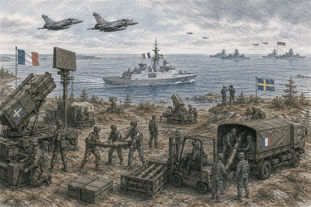
France and Sweden are moving far beyond a one-off arms deal. Stockholm’s €4.3bn order for four French-built Luleå-class frigates is becoming the anchor for a much broader defence partnership covering missiles, air defence, nuclear deterrence and possibly future combat aircraft.
NATO’s Infrastructure Blind Spot: Russia Knows Where Europe Is Weak

NATO is preparing for war with Russia, but CEPA warns that one of the Alliance’s biggest vulnerabilities sits outside the traditional battlefield. Europe’s ports, railways, energy grids, undersea cables, pipelines, satellite links and digital networks are now part of deterrence – and too many remain exposed.
Greece’s Defence Bet: Europe’s Southern Flank Gets Serious

Greece is no longer just buying French weapons. The ISDP brief argues that Athens is becoming a test case for Europe’s defence pillar – a country using French arms, French political guarantees and deeper industrial cooperation to build deterrence in the Eastern Mediterranean.
Germany’s Army Dream Hits The Manpower Wall
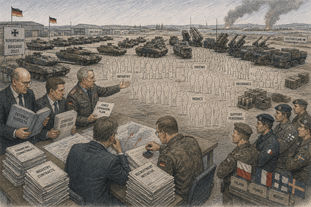
Germany says it wants to build Europe’s strongest conventional army. The World Politics Review analysis warns that Berlin is still nowhere near proving it can turn that promise into soldiers, units and real wartime capacity.
Germany’s Rearmament Test: Berlin Has Money, But Still Lacks Grip
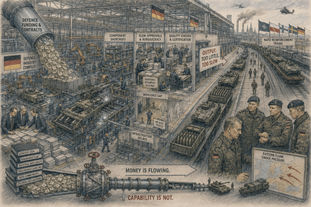
Germany has published the first military strategy in the Bundeswehr’s history – and the FPRI analysis treats it as both a milestone and a warning. Berlin is finally admitting that Russia is the central threat, that territorial defence is back, and that Germany must become a serious military actor at the heart of NATO.
NATO’s Spending Boom: Big Numbers, Bigger Doubts
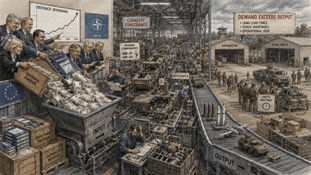
NATO’s European members are finally spending serious money on defence. The IISS analysis says the rise is real, rapid and historically significant: European NATO budgets are expected to climb by almost 10 percent in 2026, reaching around $639 billion. Since Russia’s full-scale invasion of Ukraine, nominal spending has surged by more than 90 percent.
Europe’s AI Cyber Gap: Brussels Is Regulating While The Machines Move Faster

Europe is facing a new cyber threat that its rulebooks are not built to handle. The Carnegie Europe paper warns that autonomous AI agents are moving into cyberspace as tools that can scan, reason, adapt and act with far less human supervision than traditional software.