World Center for Strategic Studies
From closed analysis to public debate

- MONTH
- YEAR

Europe’s Security System Is Too Slow – And Emergency Coalitions Cannot Save It Forever
Europe is facing growing security threats, but its institutions remain too divided and cumbersome to respond quickly. Russia’s war against Ukraine, intensifying hybrid attacks and uncertainty over American commitments have pushed European governments into temporary coalitions that bypass Brussels’ slow decision-making. In a NUPI policy brief, John Karlsrud and Yf Reykers warn that these improvised alliances cannot provide the lasting coordination Europe needs. They support creating a European Security Council bringing together EU leaders and crucial partners such as Britain, Canada, Norway and Ukraine. The challenge is whether governments can overcome their attachment to national sovereignty before the next major crisis exposes the weaknesses of the existing system.
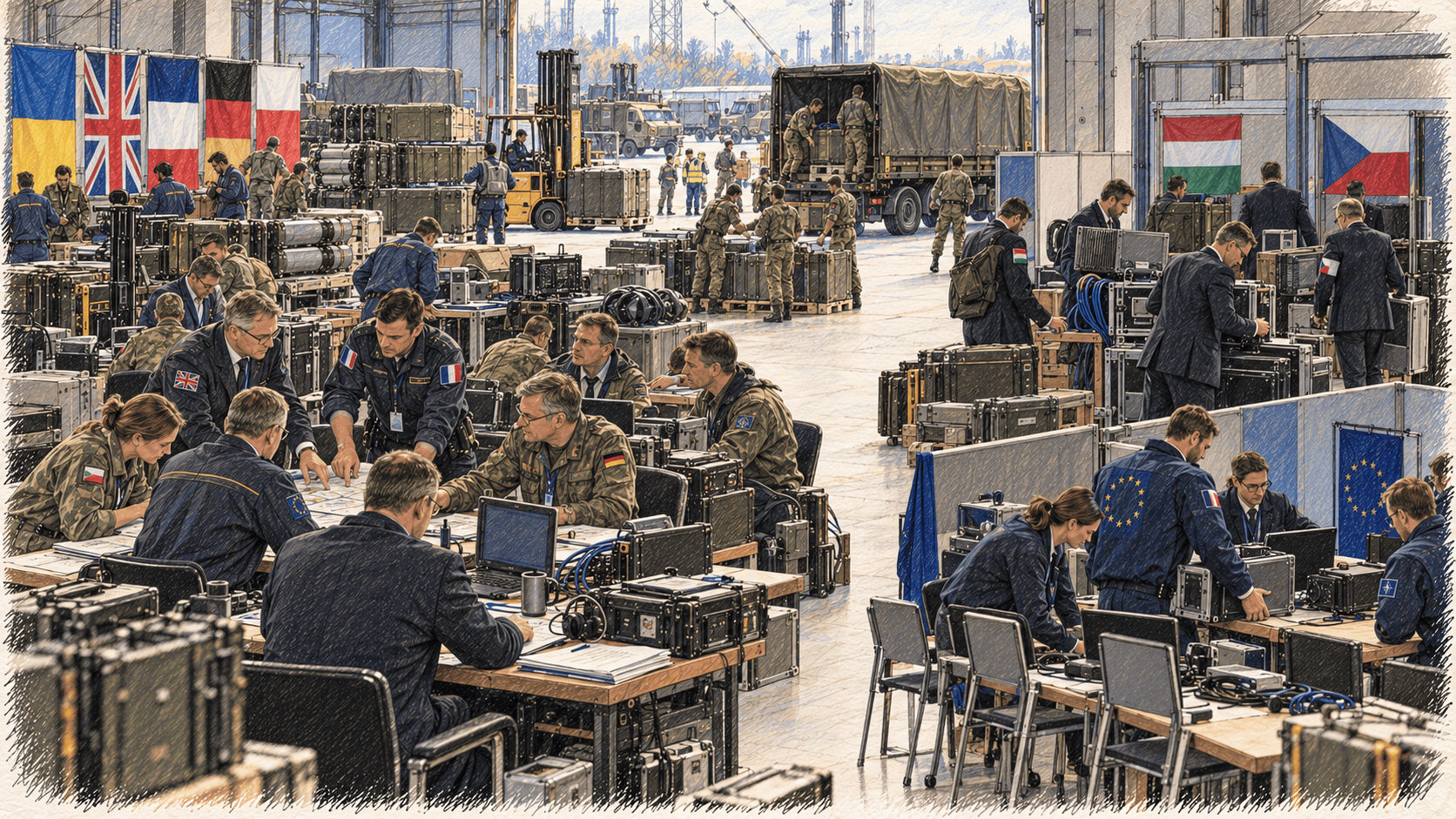
Brussels is too slow for a dangerous world
The EU’s security architecture still depends heavily on consensus among national governments.
That encourages compromise but can delay urgent decisions and produce policies shaped by the least ambitious participants.
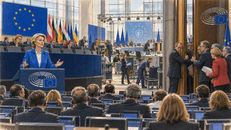
Ursula von der Leyen’s September 2026 State of the Union address acknowledged this weakness by proposing a European Security Council and an Emergency Security Protocol.
The proposed emergency mechanism would resemble NATO’s Article 4 consultation process, allowing European leaders to convene rapidly when a member faces a serious threat.
But the proposal immediately encountered questions about legal authority, institutional design and national sovereignty.
Europe has already started bypassing its institutions
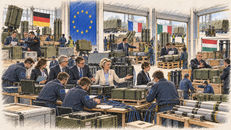
Governments increasingly rely on smaller groups when formal EU procedures prove too slow.
France, Germany and Britain cooperate through the E3 format, while the E5 brings together France, Germany, Italy, Poland and Britain.
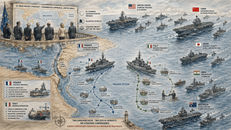
The Coalition of the Willing for Ukraine, launched under French and British leadership in 2025, offers another example.
These arrangements allow countries to coordinate security decisions without waiting for every EU member to agree.
They also bring Britain into European security discussions despite its departure from the Union.
Emergency coalitions have a serious weakness
NUPI argues that temporary coalitions are useful but structurally unreliable.
They are easy to establish, inexpensive to operate and flexible enough to respond to immediate threats.
But they are equally easy to abandon.
Membership depends on changing political interests, commitments are often limited to particular crises and long-term strategic planning becomes difficult.
Europe risks building its security cooperation around arrangements that may disappear when governments change priorities.
The E5 is too narrow, the Ukraine coalition too large
Existing formats also face problems of representation and effectiveness.
The E5 brings together several major European powers but excludes many countries whose security interests would be affected by its decisions.
The Coalition of the Willing for Ukraine includes a broader range of participants but is too large to serve as an efficient forum for directing Europe's overall security strategy.
Neither provides the combination of political legitimacy, continuity and operational effectiveness that the authors believe Europe requires.
Von der Leyen's proposal remains politically fragile
The European Security Council is not a new idea, but its institutional form remains unresolved.
Creating a formal EU body could require treaty changes. Establishing a special European Council format might be easier but would raise questions about participation and authority.
Von der Leyen also announced her proposals without securing prior agreement from national governments.
Because security and defence remain largely national responsibilities, major institutional changes would require unanimous political support.
NUPI warns that disputes over legal arrangements could consume the energy needed to improve Europe's actual security readiness.
Canada and Britain belong inside the discussion
The proposed council would extend beyond EU membership.
Britain, Canada, Norway and Ukraine share important European security interests but occupy different positions within existing institutions.
Bringing them into a standing leaders' forum could strengthen coordination on threats affecting the wider continent.
The authors also view closer cooperation with these countries as a response to weakening confidence in the United States.
Rather than relying entirely on Washington, Europe would develop a more permanent framework connecting governments prepared to assume greater responsibility for their own security.
Europe needs institutions that survive individual crises
NUPI's central recommendation is to transform flexible cooperation into something more durable.
The EU and the E5 could help establish a European Security Council capable of maintaining political dialogue, coordinating responses and developing longer-term strategic priorities.
Such a body would not eliminate national differences, but it could provide continuity that temporary coalitions lack.
The objective is to move beyond emergency improvisation towards a security structure with clearer representation, accountability and strategic direction.
The reality check: Temporary alliances cannot replace lasting security institutions
Karlsrud and Reykers argue that Europe's existing arrangements no longer match the speed and scale of the threats confronting it.
Smaller coalitions have demonstrated that European governments can act together when circumstances demand it. Their weakness is that cooperation remains fragmented and vulnerable to political change.
A European Security Council could offer a more durable alternative, but only if national governments agree to turn von der Leyen's proposal into a functioning institution.
Without that agreement, Europe may continue assembling new coalitions for every emergency while leaving the underlying weaknesses of its security architecture unresolved.