World Center for Strategic Studies
From closed analysis to public debate
- MONTH
- YEAR

Europe’s Energy Powers Pull Apart As Industrial Crisis Deepens
Europe’s biggest economies are no longer moving in the same direction. As energy costs rise again, heavy industry weakens and defence spending explodes, Germany, France and Italy are increasingly pursuing their own survival strategies while Brussels struggles to hold together a coherent economic plan.
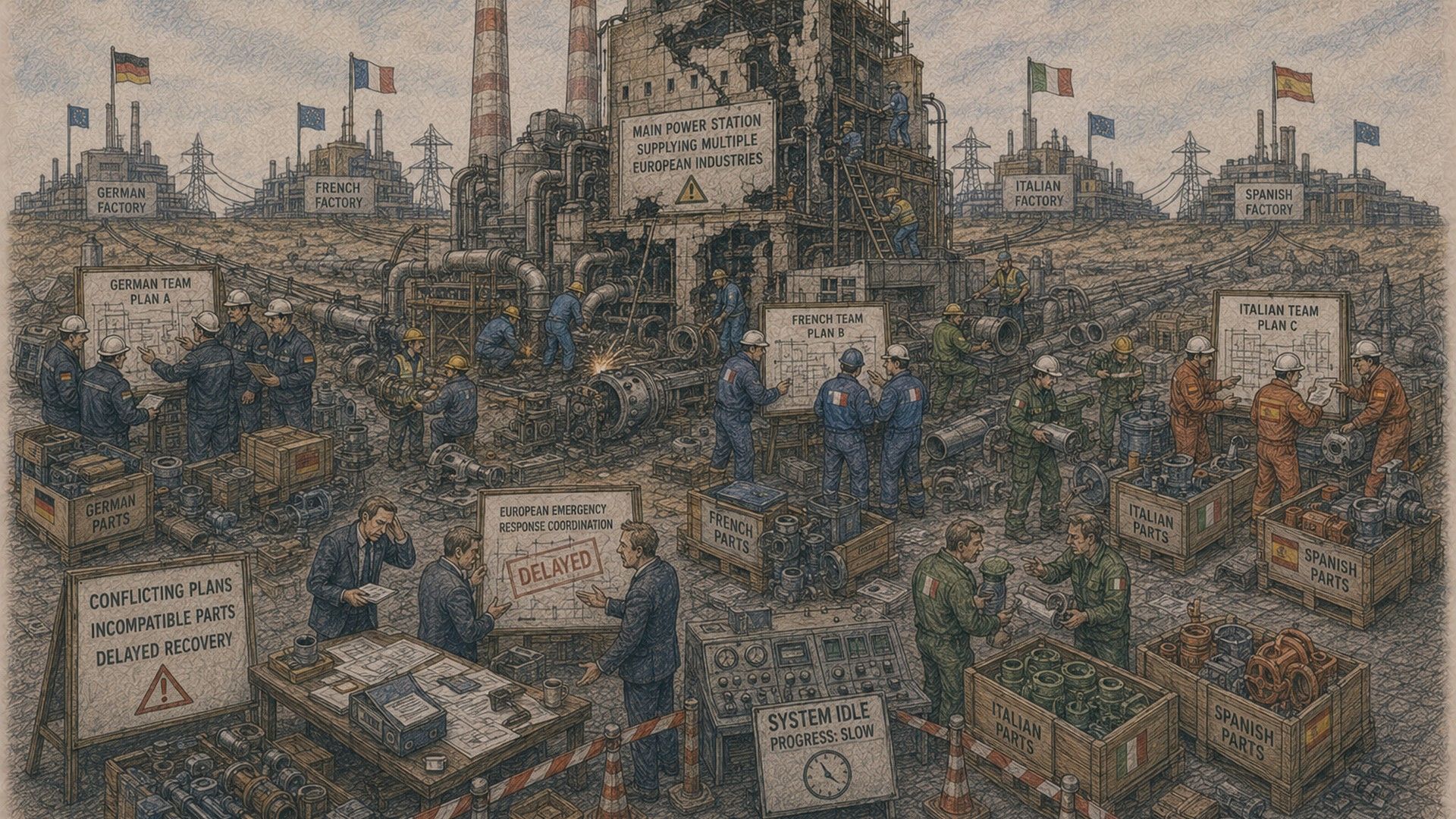
The Ifri discussion paper and seminar warning highlights a growing fear inside European policy circles: the continent is entering another phase of energy and industrial crisis without a clear shared strategy. Governments are reaching for short-term fixes, national subsidies and domestic political compromises while the EU argues over whether its entire transition model still works.
The danger is no longer just economic slowdown. It is fragmentation.
The old engine is stalling
For decades, Europe relied on a basic formula: German industry, French political leadership and Italian manufacturing strength operating inside a common market.
That formula is now under strain. Germany is grappling with the long-term fallout from losing cheap Russian energy. France is struggling to balance industrial competitiveness with climate ambitions. Italy faces pressure from high debt, weak growth and rising energy costs.
All three countries are confronting the same storm – but increasingly with different answers.
Brussels cannot decide what comes next
One of the sharpest warnings concerns the growing divide inside EU policymaking itself. Officials are split between preserving the existing Green Deal framework and radically reworking it to protect industry and competitiveness.
The argument is becoming more intense as energy-intensive sectors continue to weaken and companies complain about costs, regulation and uncertainty. Brussels still talks about strategic autonomy and industrial renewal. But the debate increasingly revolves around whether current policies are accelerating the very decline they were supposed to prevent.
The result is paralysis at the worst possible moment.
Industry keeps losing ground
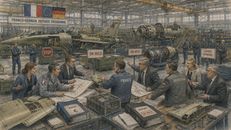
Heavy industry remains one of the biggest casualties. Steel, chemicals, manufacturing and energy-intensive production continue to face higher operating costs than many global competitors.
The report points to growing concern over industrial erosion, rising borrowing costs and worsening competitiveness. European governments are under pressure to protect domestic industries while also funding energy transitions, defence expansion and social spending.
The bill keeps growing while economic confidence keeps shrinking.
China and America tighten the squeeze
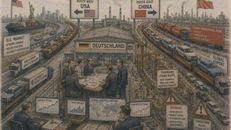
Europe’s crisis is being intensified by external pressure from both sides. China continues to expand its industrial and clean-tech reach while flooding markets with competitive exports. Meanwhile, the United States offers lower energy prices and powerful industrial incentives that attract investment away from Europe.
The continent finds itself trapped between two economic giants that increasingly shape the global industrial landscape. Brussels talks about sovereignty, but companies follow costs and incentives.
That is creating a widening gap between European ambitions and economic reality.
National fixes are replacing common strategy
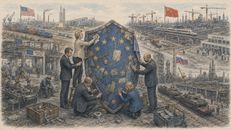
Governments are becoming increasingly tempted to act alone. Emergency subsidies, domestic support packages and sector-specific interventions are spreading as leaders try to shield their own economies from political backlash.
The problem is that every national workaround weakens the idea of a coordinated European response. What begins as crisis management risks turning into long-term fragmentation.
The more pressure rises, the harder it becomes to maintain a genuinely common industrial policy.
Security costs are changing everything
Another problem sits in the background: defence spending. Europe is pouring increasing resources into military readiness as security threats grow and American commitments become less predictable.
That creates a brutal budgetary squeeze. Governments must fund defence, energy resilience, industrial support and climate transition simultaneously.
The economic model that worked during years of relative stability is now being stretched in every direction at once.
The weakness rivals will exploit
The deeper concern is strategic. Every division inside Europe creates opportunities for competitors and rivals.
If Germany, France and Italy move further apart on industrial policy, energy planning and economic priorities, the EU becomes less capable of acting as a unified power. External actors gain leverage while Europe spends more time managing internal disputes.
That is exactly the scenario European leaders spent years claiming they wanted to avoid.
The warning sign: Europe is running out of easy choices
The Ifri assessment is ultimately about more than energy prices or industrial subsidies. It reflects a continent entering a harsher phase where economic security, industrial survival and geopolitical competition are colliding at the same time.
Europe still wants growth, green transition, strategic autonomy and fiscal stability. The problem is that the old assumptions holding those goals together are starting to break down.
And as Germany, France and Italy drift towards different solutions, the risk is that Europe’s next crisis becomes a crisis of cohesion itself.