World Center for Strategic Studies
From closed analysis to public debate
- MONTH
- YEAR

Iran War Pushes Europe Towards Economic Breakdown
Europe is staring at the return of a nightmare it thought it had escaped. Fresh economic data and analyst warnings suggest the Iran conflict is dragging the continent towards stagflation – the toxic mix of rising prices, weak growth and collapsing confidence that haunted Western economies in the 1970s.
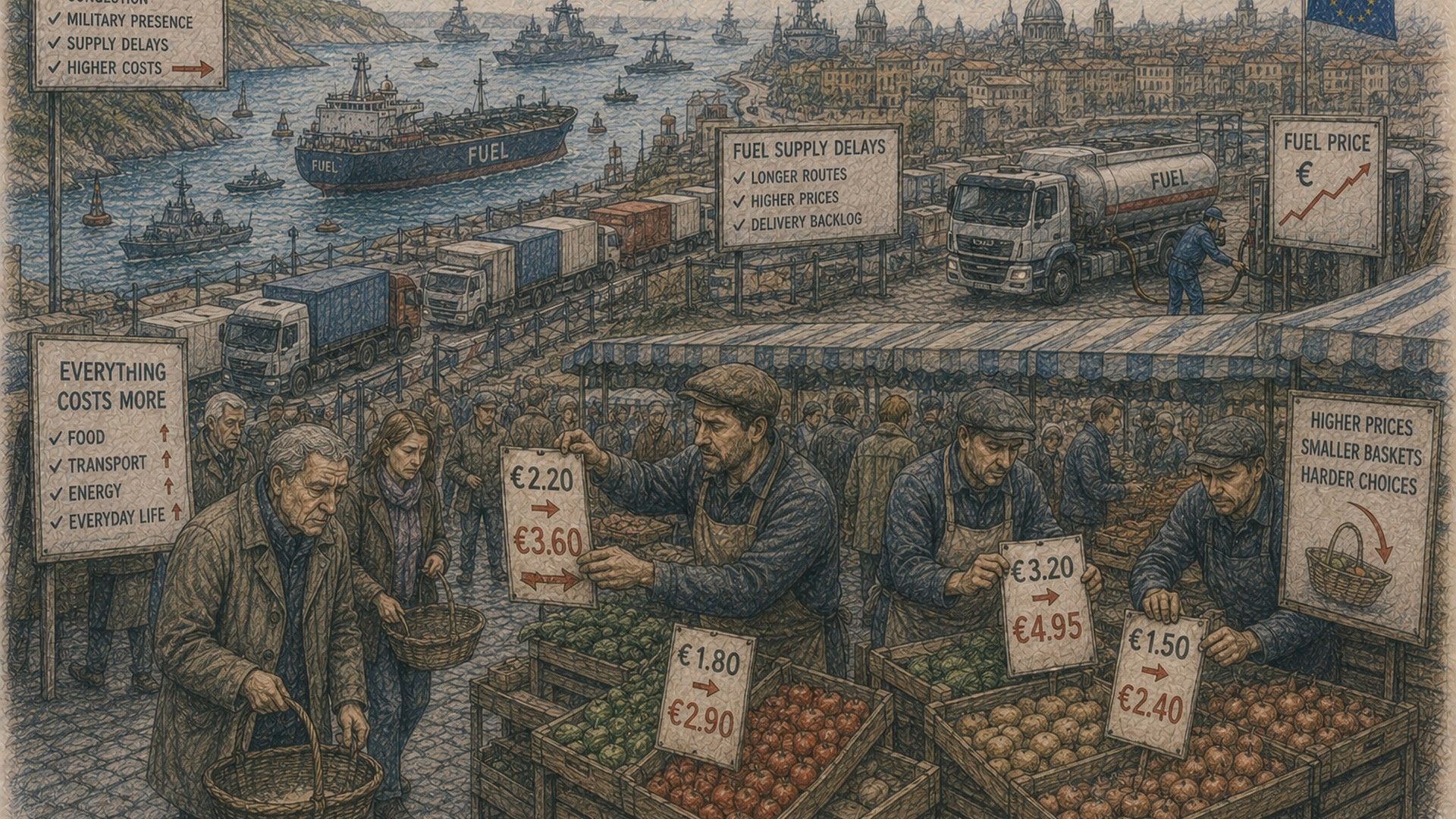
The Semafor report points to a bleak trend already taking shape. Growth across the eurozone has almost stalled, inflation is climbing again and consumers are pulling back. After barely recovering from the Russia energy shock, Europe now faces another crisis driven by forces far beyond its control.
The fear in financial markets is no longer just inflation. It is that Europe could end up trapped between recession and rising costs at the same time.
The energy trap returns
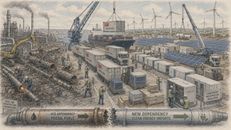
The biggest threat comes from energy. The Iran war has driven oil and gas prices sharply higher, reviving the same vulnerability that battered Europe after Moscow squeezed supplies in 2022.
Europe remains one of the world’s largest energy importers. That means every disruption in the Gulf hits households, industry and transport almost immediately. Analysts warn that if instability around the Strait of Hormuz continues, fuel costs could remain elevated for months.
The continent spent years trying to escape dependence on Russian energy. Now it is discovering how exposed it still is to global supply shocks.
Growth is barely moving
The economic numbers already look alarming. Eurozone growth has slowed to almost nothing, while business confidence and consumer sentiment are deteriorating.
Germany, the traditional engine of Europe’s economy, is once again under pressure. Weak industrial output, higher energy costs and growing fiscal strain are feeding concerns that Europe’s largest economy could become one of the biggest casualties of a prolonged crisis.
For many governments, the recovery never fully arrived before the next shock landed.
Prices are rising again
Inflation was supposed to be coming under control. Instead, fuel costs linked to the conflict are spreading through wider parts of the economy.
Food, transport, services and consumer goods are all beginning to feel the impact. Central bankers increasingly fear that rising energy costs could become embedded in prices, forcing interest rates higher even as economic activity weakens.
That is the classic stagflation trap: everything becomes more expensive while growth disappears.
Washington fights wars – Europe pays bills
One of the harshest realities exposed by the crisis is Europe’s lack of control. The conflict is being shaped by military and geopolitical decisions made far outside Brussels.
Yet Europe absorbs much of the economic damage. Oil shocks, disrupted shipping routes and energy market panic all hit the continent harder than many of the powers driving events.
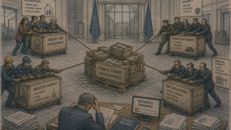
The result is a familiar pattern. Europe reacts, subsidises, borrows and manages fallout while strategic decisions are taken elsewhere.
This will hit industry hard
Manufacturers are among the biggest losers. Energy-intensive sectors already struggling with high costs now face another wave of pressure.
Chemicals, steel, transport and heavy industry remain vulnerable to prolonged fuel and electricity price increases. Some analysts warn that continued disruption could accelerate deindustrialisation in parts of Europe already losing competitiveness against the United States and Asia.
The longer the crisis lasts, the harder it becomes for governments to shield businesses without piling more pressure onto public finances.
The weakness rivals exploit
The Iran shock is exposing a broader strategic failure. Europe has invested heavily in resilience since the Russia crisis, yet its economic model remains deeply vulnerable to external disruptions.
Whether the pressure comes from Moscow, instability in the Gulf or shifts in global energy markets, the result is often the same: rising costs, weaker growth and emergency political responses.
The continent still struggles to protect itself from shocks it cannot influence.
The stark truth: Europe escaped one crisis and walked into another
The warning from economists is not that Europe faces an immediate collapse. It is that the foundations are weakening again just as leaders claimed stability was returning.
Growth is fading. Inflation is returning. Public finances are under pressure. Consumers are losing confidence.
Four years after the Russia energy shock, Europe is once again discovering how expensive dependence can be.
And this time, the room for error looks even smaller.