
World Center for Strategic Studies
From closed analysis to public debate

- MONTH
- YEAR

Europe’s Digital Trap: Brussels Risks Shutting Out the Allies It Needs
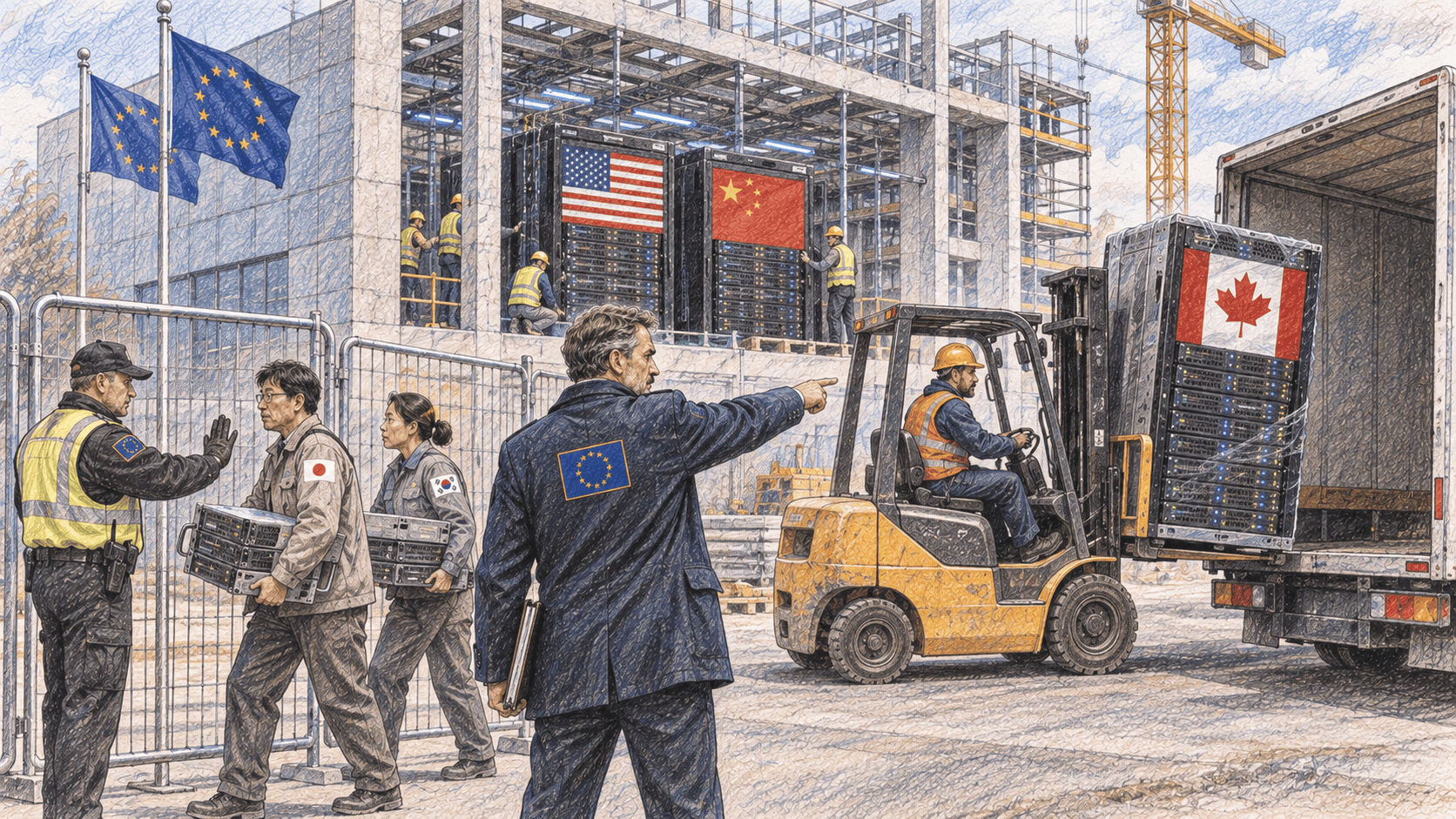
Europe wants to break its technological dependence on the United States and China, but its own protectionist policies threaten to undermine that ambition. A CEPA commentary by William Echikson warns that Brussels could end up excluding trusted democratic partners from its digital market just when it needs them most. Canada’s proposed associate EU membership offers a chance to build a stronger technological alliance. Yet without binding commitments and genuine market access, the initiative risks becoming another grand political announcement with little practical impact.
Digital partnerships with little power
The EU already has digital partnerships with Canada, Japan, South Korea, Singapore and Brazil. But these agreements remain largely non-binding discussion forums rather than effective instruments of economic and technological cooperation.
The recent EU-Canada summit in Montreal produced progress on cross-border data flows and Canadian participation in European high-performance computing. However, these steps fall short of the deeper integration needed to reduce dependence on American and Chinese technology.
Brussels risks blocking its own allies
Europe’s push for digital sovereignty could become its biggest obstacle. The proposed Made in Europe initiative, cybersecurity certification requirements and planned Cloud and AI Act could disadvantage Canadian, Japanese and Korean technology companies.
Trusted partners might be denied top cybersecurity ratings or excluded from public procurement contracts simply because they are not European.
Canada is also embracing economic nationalism through its Made in Canada strategy and proposed domestic procurement preferences. Both sides risk erecting barriers against the very partners they claim to trust.
Political divisions threaten progress
Brussels cannot even agree on what Canada’s new relationship with the EU should be called.
European Commission President Ursula von der Leyen proposed associate membership, but EU governments led by Germany rejected the terminology over concerns about its unclear meaning.
The rise of nationalist parties in France and Germany adds another complication. Their hostility towards Brussels and scepticism about free trade could make deeper technological integration harder to achieve.
Washington and Beijing benefit from European hesitation
The strategic purpose of stronger digital partnerships is to give Europe more alternatives to American and Chinese technology.
But protectionist restrictions could shrink the pool of trusted suppliers rather than expand it. Instead of reducing external dependence, Europe risks weakening its own technological choices.
The commentary argues that Europe should remain open to cooperation with Washington, including through a revived EU-US Trade and Technology Council, rather than turning digital sovereignty into economic isolation.
Six months to turn promises into action
The EU and Canada have given themselves six months to define their proposed new relationship.
Echikson calls for legally binding commitments on data protection, infrastructure compatibility and public procurement. Canadian and European digital products should receive equal treatment, including access to the highest cybersecurity certifications.
Cooperation should also cover critical raw materials, energy, strategic stockpiles, subsea cables and space infrastructure, including alternatives to Starlink.
National security exemptions that restrict market access should be narrowed or eliminated wherever possible.
The cost of shutting partners out
The proposed alliance should extend beyond Canada to Japan, South Korea and other democratic partners, while leaving the door open to the United States.
The central danger is that protectionism will reduce competition, raise prices and weaken Europe's ability to develop alternatives to dominant technology suppliers.
The stark truth: Europe cannot build independence by excluding allies
Brussels faces a strategic contradiction. It wants greater technological autonomy but is considering rules that could punish reliable partners and undermine the cooperation needed to achieve it.
Canada offers an opportunity to replace political declarations with enforceable digital integration. If Europe chooses protectionist barriers instead, its sovereignty agenda could leave it with fewer partners, higher costs and continued dependence on the very powers it wants to escape.