
World Center for Strategic Studies
From closed analysis to public debate

- MONTH
- YEAR

Europe’s Migration Trap: Ceuta Exposes the Cost of Outsourcing Control
Europe thought it could buy migration security by paying authoritarian neighbours to guard its borders. The Ceuta crisis has exposed how fragile that bargain can become.
More than 60,000 people entered the Spanish exclave in July and August, while over 100 died crossing – yet Carnegie Europe argues Brussels is drawing exactly the wrong lesson. Instead of confronting the political conditions helping drive instability, the EU is preparing to spend even more on the same transactional model that left it vulnerable.
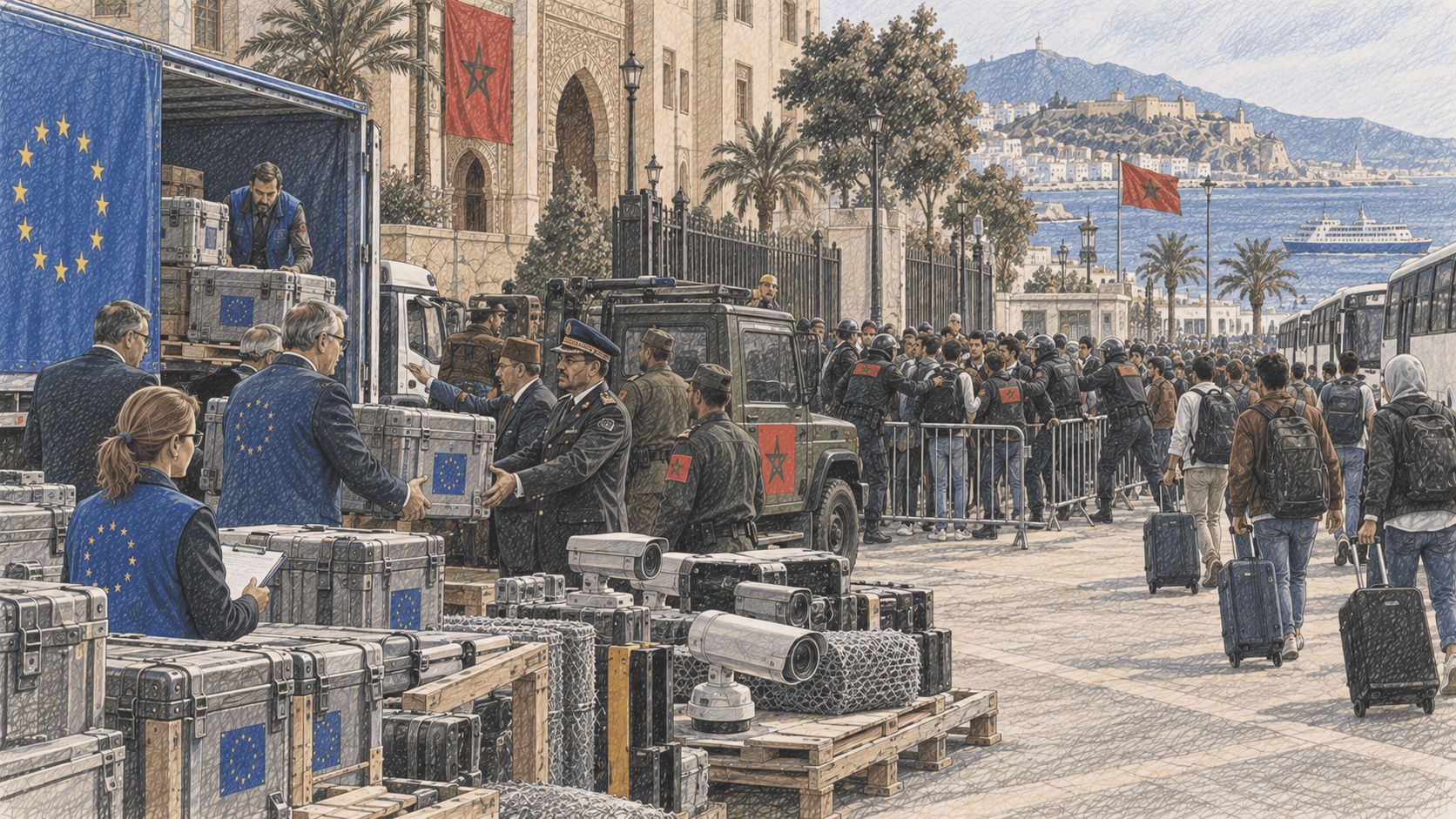
Europe paid for control – and got dependence
For a decade, the EU has poured billions into cooperation with African governments to keep migration away from European territory.
Morocco became a crucial partner. But Carnegie’s commentary argues that an increasingly repressive Rabat has used European resources largely to strengthen its own interests and political survival.
Ceuta showed the weakness in this bargain: Europe has outsourced part of its border security to governments whose priorities do not necessarily match its own.
Brussels doubles down after failure
The EU’s response is striking. Rather than rethink the strategy, Commission President Ursula von der Leyen has suggested sending more money to Morocco.
Brussels is also pushing ahead with an upgraded strategic partnership offering additional border-management support. Meanwhile, the Ceuta shock has accelerated plans for migrant return hubs, including talks with Rwanda.
The system is responding to a crisis created under the existing approach by expanding that approach.
Morocco holds uncomfortable leverage
Carnegie argues that Rabat has repeatedly played a double game – contributing to wider crises while presenting itself as indispensable to Europe in resolving them.
Whatever Morocco’s precise role in the latest crossings, the deeper vulnerability remains. If European migration control depends heavily on authoritarian partners, those governments acquire leverage over the EU.
Border security becomes something Europe partly rents from others rather than controls itself.
Europe ignored the pressure building inside Morocco
The deeper failure, the commentary argues, is Europe’s unwillingness to connect migration policy with Morocco’s increasingly repressive domestic politics.
Young Moroccans erupted in protests last year, only to face violent repression. Without effective political channels for grievances, frustration can instead strengthen incentives to leave.
European reactions were muted. Worse, the EU deepened cooperation with the same authorities accused of repression and human-rights abuses.
Madrid helped build the trap
Spain has particular responsibility. Successive centre-right and centre-left governments have weakened or blocked attempts to put greater EU pressure on Morocco over democracy and human rights.
Madrid also secured €500 million in EU funding for border controls and fences around Ceuta and Melilla even as Morocco became more authoritarian.
Spain may have legitimate complaints about the lack of European solidarity during the crisis, but Carnegie argues that progressive governments cannot escape responsibility for helping construct the foreign-policy model now causing trouble.
Migration policy clashes with Europe’s values
The contradiction reaches beyond Ceuta. The EU claims democratic security is central to its external relations while repeatedly prioritising short-term deals with authoritarian governments when migration becomes politically explosive.
Carnegie’s prescription is not to abandon border cooperation. It is to stop pretending border payments alone create stability and to match such deals with support for civil society, political liberalisation and democratic pressure.
The ugly reality: Europe outsourced control and bought vulnerability
Ceuta should have forced Brussels to question whether authoritarian partners can provide durable security. Instead, Europe appears ready to offer more money and deepen the same relationships.
If the EU treats every migration shock simply as another border-management problem, it risks paying repeatedly for temporary control while ignoring the instability underneath.