World Center for Strategic Studies
From closed analysis to public debate

- MONTH
- YEAR

Europe’s Car Industry Faces a Dangerous Compromise: Paris and Berlin Risk Protecting Yesterday’s Technology
France and Germany have struck an automotive deal that could weaken Europe's climate ambitions while failing to make its carmakers more competitive. In a Bruegel commentary, Ignacio García Bercero, Simone Tagliapietra and Jeromin Zettelmeyer criticise the Franco-German agreement of 16 October for combining weaker emissions requirements with tougher preferences for European-made vehicles. The authors argue that Paris has accepted German demands to protect combustion engines, while Berlin has embraced French-style industrial protectionism. The result could be an industry shielded from competition but given fewer incentives to modernise – just as Chinese manufacturers consolidate their lead in electric vehicles.
Paris and Berlin have traded concessions
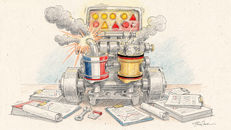
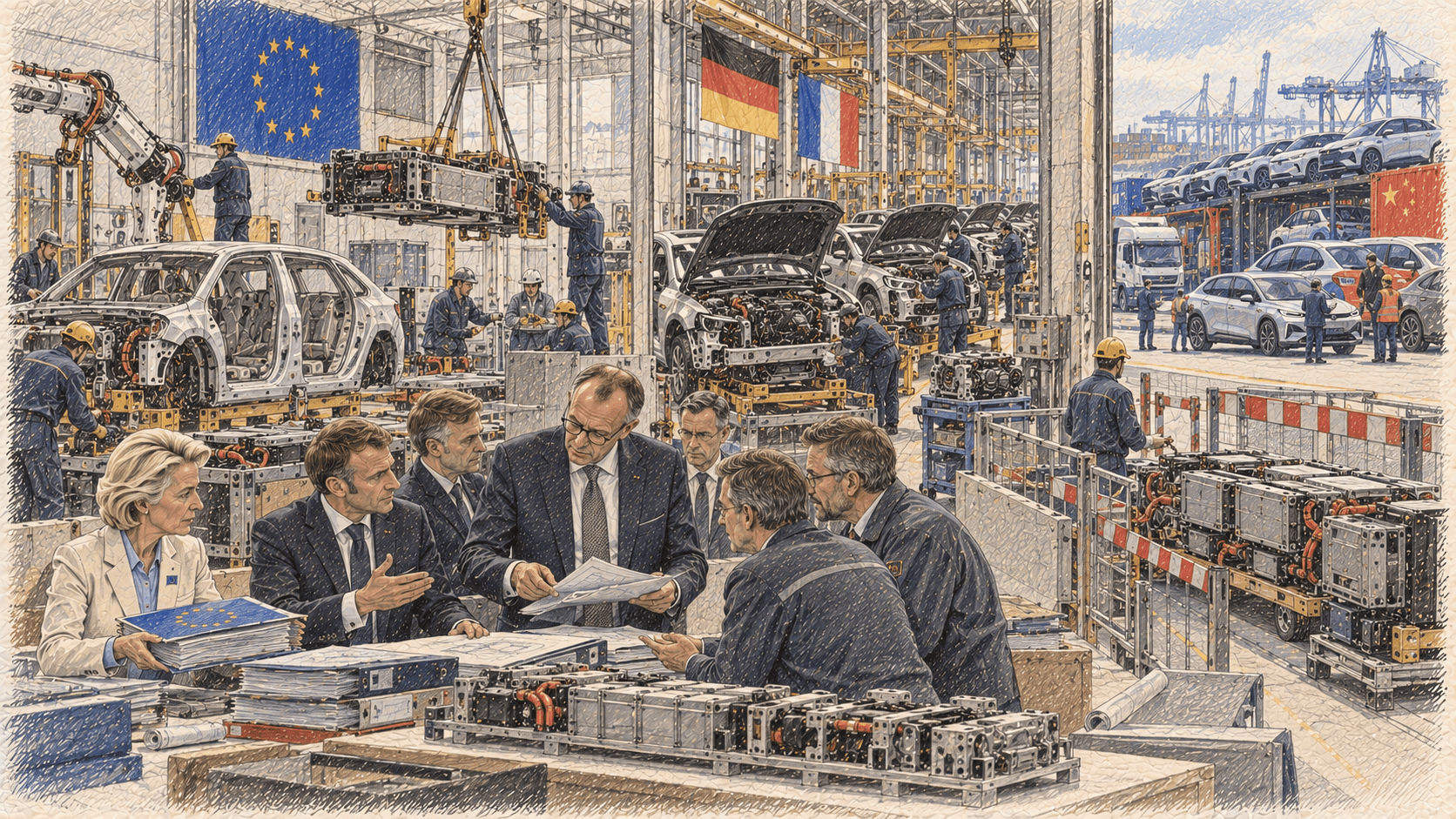
The Franco-German statement represents a political compromise between two previously competing approaches.
Germany wants greater flexibility over the EU's 2035 car emissions requirements, protecting manufacturers still heavily invested in combustion-engine technology.
France wants stronger European production preferences in public procurement and industrial support.
Both governments argue that their approach will protect jobs, encourage investment and preserve Europe's automotive industry.
Bruegel disputes that assessment, warning that the compromise could undermine both decarbonisation and industrial competitiveness.
Europe is weakening its own transition
The EU's 2040 climate target requires a 90 per cent reduction in net greenhouse gas emissions compared with 1990.
Weakening the automotive sector's contribution would make that objective harder to achieve.
The authors argue that higher diesel prices are already strengthening incentives for consumers to switch to electric vehicles, making further regulatory concessions particularly questionable.
Relaxing the 2035 requirements could also create uncertainty for companies that have invested heavily in electrification.
Instead of establishing a predictable direction for industrial transformation, Brussels risks sending contradictory signals.
Germany could preserve the wrong factories
Bruegel's industrial concern is straightforward: protecting existing production is not the same as creating future competitiveness.
European manufacturers face increasingly strong competition from Chinese electric-vehicle producers.
Temporary protection may give them time to restructure, develop technologies and improve production efficiency.
But weaker emissions requirements could encourage some manufacturers to prolong investment in combustion engines rather than accelerate the shift towards electric vehicles.
The authors warn that postponing adjustment may leave Europe's industry less competitive when international markets move further towards electrification.
France's protectionism could punish Europe's partners
The second problem concerns the proposed preference for products manufactured inside the EU.
Such restrictions could disadvantage countries whose automotive industries are closely integrated with European supply chains.
Bruegel identifies Japan, South Korea, Türkiye, Morocco and the United Kingdom among the potentially affected partners.
These countries provide investment, components, manufacturing capacity and markets that support European automotive production.
Excluding them from incentives or procurement opportunities could damage economic relationships without necessarily improving Europe's competitiveness.
Brussels risks undermining its trade commitments
The authors also question whether restrictive European-content requirements would comply with existing international obligations.
Preferences limited to EU production could conflict with World Trade Organization rules and trade agreements.
The legal consequences would depend on the precise measures adopted, but the broader geopolitical risk is clear.
Europe is seeking closer economic cooperation with reliable partners while simultaneously considering industrial policies that could discriminate against them.
That contradiction could weaken Brussels' credibility at a time when it needs international support against economic coercion and unfair competition.
Protection should buy time for reform
Bruegel does not reject every form of industrial protection.
The authors accept that temporary safeguards compatible with international trade rules may be justified to help European manufacturers respond to Chinese competition.
But protection must serve a specific purpose: accelerating technological upgrading and restructuring.
Without those conditions, public support risks preserving existing business models rather than encouraging innovation.
Europe could spend political and financial resources defending an industrial structure that still needs fundamental change.
A different industrial alliance is possible
Bruegel proposes replacing narrow European-production preferences with a more cooperative approach.
The Commission should negotiate reciprocal access to public procurement and electric-vehicle incentives with interested trading partners.
Türkiye and Morocco are particularly relevant because their manufacturing sectors are closely connected to Europe's automotive industry.
Such agreements could expand markets for cleaner vehicles, encourage investment and strengthen supply chains without unnecessarily excluding established partners.
The authors argue that this approach could also guide cooperation in other industries, including low-emission steel.
The uncomfortable truth: Protecting old technology will not restore competitiveness
Bruegel's criticism is that France and Germany have combined two policies that may reinforce each other's weaknesses.
Relaxing emissions requirements could delay industrial modernisation, while restrictive production preferences could damage valuable trade partnerships.
The alternative is to maintain clear incentives for electrification, permit carefully designed temporary protection and build reciprocal industrial relationships with trusted partners.
Europe's automotive industry needs time to adapt, but the Franco-German compromise risks giving it reasons to postpone the transformation on which its future competitiveness depends.