World Center for Strategic Studies
From closed analysis to public debate
- MONTH
- YEAR

Von der Leyen’s Power Grab Meets Reality: Brussels Cannot Govern Europe by Speech Alone
Ursula von der Leyen wants to speak for Europe, reshape its security architecture and even open the EU’s doors to Canada. But a TEPSA analysis warns that the Commission President’s political ambitions are racing ahead of her institutional authority. Her 2026 State of the Union address contained sweeping proposals on defence, enlargement, trade and Europe's future, yet some of its boldest ideas concern decisions she cannot make herself. The central problem is not necessarily what von der Leyen wants to achieve – it is whether Europe’s divided institutions and national governments will allow her to deliver.
Brussels has a leadership problem
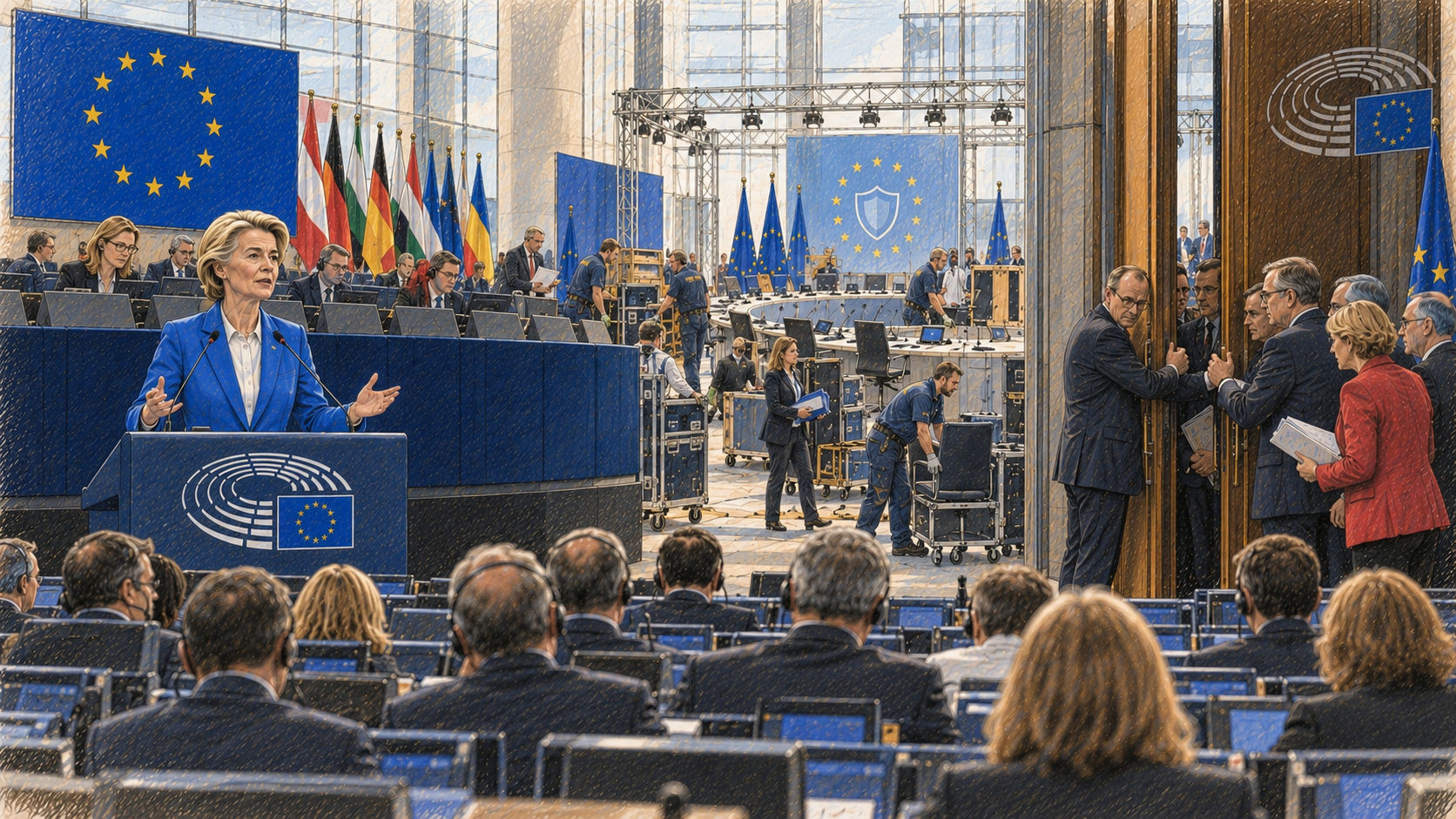
The State of the Union address increasingly resembles an American presidential speech, but the EU has no equivalent of a US president.
Von der Leyen can propose legislation, but the European Parliament and member states decide what becomes law. On security and constitutional questions, her authority is even more limited.
TEPSA argues that the speech exposed this contradiction: the Commission President increasingly presents herself as Europe's political leader, although the Union's institutional structure has not changed.
Canada exposes the limits of her power
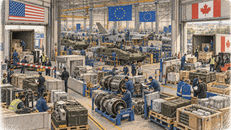
One of the most striking proposals was to make Canada the EU's first associate member.
But no such membership category currently exists, and creating one would require agreement among EU institutions and governments. The announcement also raised uncomfortable questions about what similar arrangements might mean for European candidate countries.
The apparent lack of prior consultation made the proposal especially revealing. Von der Leyen announced a major political innovation before securing the institutional backing needed to pursue it.
Europe's new security council remains undefined
The proposed European Security Council presents another problem.
Von der Leyen envisages a forum involving European leaders and partners including Britain, Canada, Norway and Ukraine. But its mandate, membership and decision-making authority remain unclear.
If it takes binding decisions, questions of legitimacy and institutional competence arise. If it merely facilitates discussion, Europe already has forums serving similar purposes.
TEPSA warns that creating another institution without defining its purpose risks adding complexity rather than strengthening European security.
A grand European congress without a clear mandate
The proposed Congress of Europe suffers from the same weakness.
Who would convene it, who would participate and what authority would it possess?
Such an initiative could encourage serious debate about Europe's political future, but only if governments, parliamentarians and other institutions support it.
Announcing a congress is considerably easier than creating the political agreement needed to make it meaningful.
The money does not match the ambitions
The EU's financial limitations make the gap between promises and delivery even wider.
Its budget amounts to roughly 1 per cent of gross national income, far too little to finance every new defence, technology and economic priority.
Von der Leyen discussed new EU revenue sources but avoided the divisive question of additional common borrowing.
Without agreement on a larger budget, shared debt or greater mobilisation of private capital, many ambitions will remain financially constrained.
Europe is falling behind in technology
The speech also acknowledged the scale of Europe's competitive difficulties.
TEPSA notes that catching up with American and Chinese developers of frontier AI models may be unrealistic. Europe could instead gain economically by deploying AI effectively across its industries.
But that requires data centres, affordable electricity and stronger grids.
Meanwhile, the EU faces a trade deficit with China of approximately €1 billion a day, increasing pressure for tougher measures against unfair competition.
Washington's absence speaks volumes
The speech's silence about the United States was particularly striking.
Despite major tensions in transatlantic relations, von der Leyen avoided directly discussing Washington while promoting closer cooperation with Canada.
TEPSA suggests that this omission may reveal more about Europe's difficult relationship with America than an explicit statement would have done.
The uncomfortable truth: Political ambition cannot substitute for institutional authority
TEPSA does not dismiss von der Leyen's proposals. Closer relations with Canada, stronger security coordination and a debate about Europe's future could all serve important purposes.
But the Commission President cannot transform announcements into policy without the support of member states and the European Parliament.
Europe needs political leadership. What it lacks is a clear agreement over who can exercise that leadership – and how ambitious promises can become binding decisions.