World Center for Strategic Studies
From closed analysis to public debate

- MONTH
- YEAR

Germany’s Old Order Is Cracking: AfD Lands a Body Blow on Merz
Germany’s reputation for predictable, consensus-driven politics is taking a serious hit. The AfD’s 43.8 per cent victory in Saxony-Anhalt more than doubled its 2021 vote and left it only three seats short of an absolute majority.
Carnegie Europe argues that the shock reaches far beyond a small eastern state – it exposes the fragmentation of Germany’s political system and the failure of established parties to contain anger over migration, economic insecurity and social uncertainty. For Chancellor Friedrich Merz, the danger is immediate: his CDU collapsed to 17.2 per cent, while the AfD is now also ahead nationally.
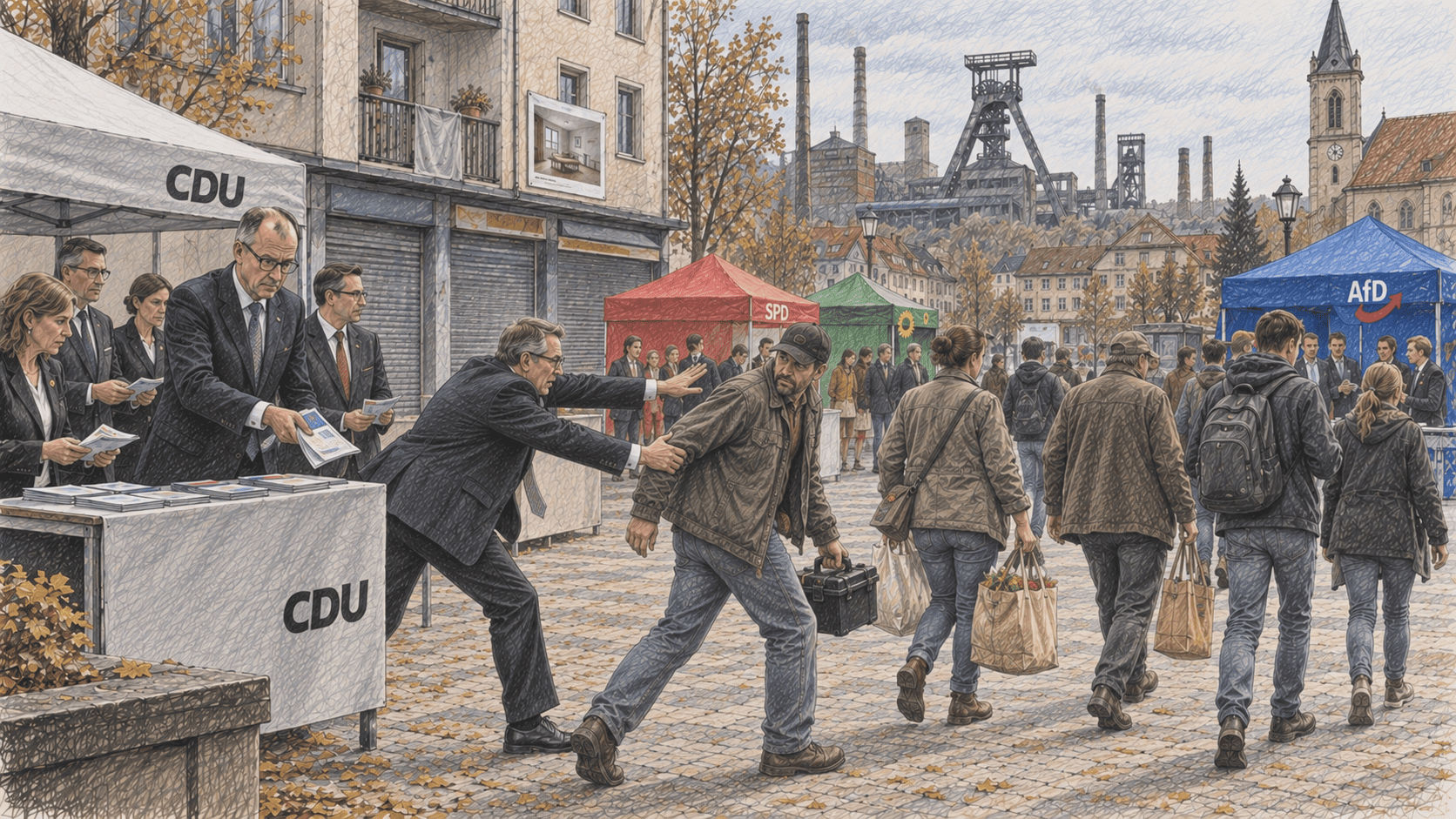
Germany’s consensus takes a beating
For decades, Germany relied on a political centre built around conservatives, social democrats, liberals and later the Greens, anchored by strong institutions and compromise.
Saxony-Anhalt challenges that model. A party Carnegie describes as extremist far-right has come within touching distance of governing a German state – something with potentially major consequences for the country’s post-1945 political settlement.
That also dents Germany’s image as the EU’s dependable anchor at a time when Europe badly needs stability from its largest economy.
The AfD found the anger
Ulrich Siegmund’s campaign exploited something Germany’s established parties have struggled to address – deep voter disillusionment.
His anti-immigration, anti-EU and pro-Russia positions, alongside opposition to weapons and aid for Ukraine, found a receptive audience. So did nostalgia among some eastern voters for the economic certainty they associate with the former East Germany.
The grievances are wider than ideology. Inflation, energy costs, housing pressures and economic insecurity have created fertile territory for populist politics.
The firewall is under pressure
The AfD fell short of an outright majority, leaving Saxony-Anhalt facing an uncertain government-building process.
One possibility is cooperation with the BSW, which holds five seats and shares some anti-EU and pro-Russia positions with the AfD. Another is attempting to attract defectors from other parties.
The CDU leadership remains committed to its firewall against AfD cooperation. But with the AfD polling nationally at 29 per cent against 21 per cent for the CDU, maintaining party discipline is becoming an increasingly punishing test for Merz.
Merz has lost the initiative
The Chancellor now faces pressure from both voters and his own political camp.
His coalition has spent valuable time fighting over welfare cuts and climate policy while Merz’s popularity has sunk. The government is promising pension, healthcare and welfare reform alongside greater infrastructure and defence spending, but Carnegie argues that communication with voters has been badly lacking.
The CDU’s traditional reliance on older voters creates another problem: repeated pension increases risk alienating younger Germans already frustrated with the status quo.
The shock will not stay in Magdeburg
Berlin and Mecklenburg-Vorpommern face state elections next, giving the AfD opportunities to carry its momentum elsewhere.
The consequences could spread beyond Germany. With elections due in France, Poland and Spain in 2027, other nationalist and populist movements will be studying how the AfD converted economic anxiety, migration concerns and hostility towards the establishment into such a commanding result.
Germany has become a political test case for Europe.
The last word: Berlin is running out of time
Carnegie’s message is that Merz cannot rely on the old political machinery to repair itself. His government needs to explain reforms, engage frustrated voters and show that established parties can still deliver.
Saxony-Anhalt has exposed the cost of failing to do so – Germany’s once-solid centre is losing ground faster than its leaders can rebuild it.