
World Center for Strategic Studies
From closed analysis to public debate

- MONTH
- YEAR

Germany’s Firewall Under Siege: AfD Lands a Political Earthquake
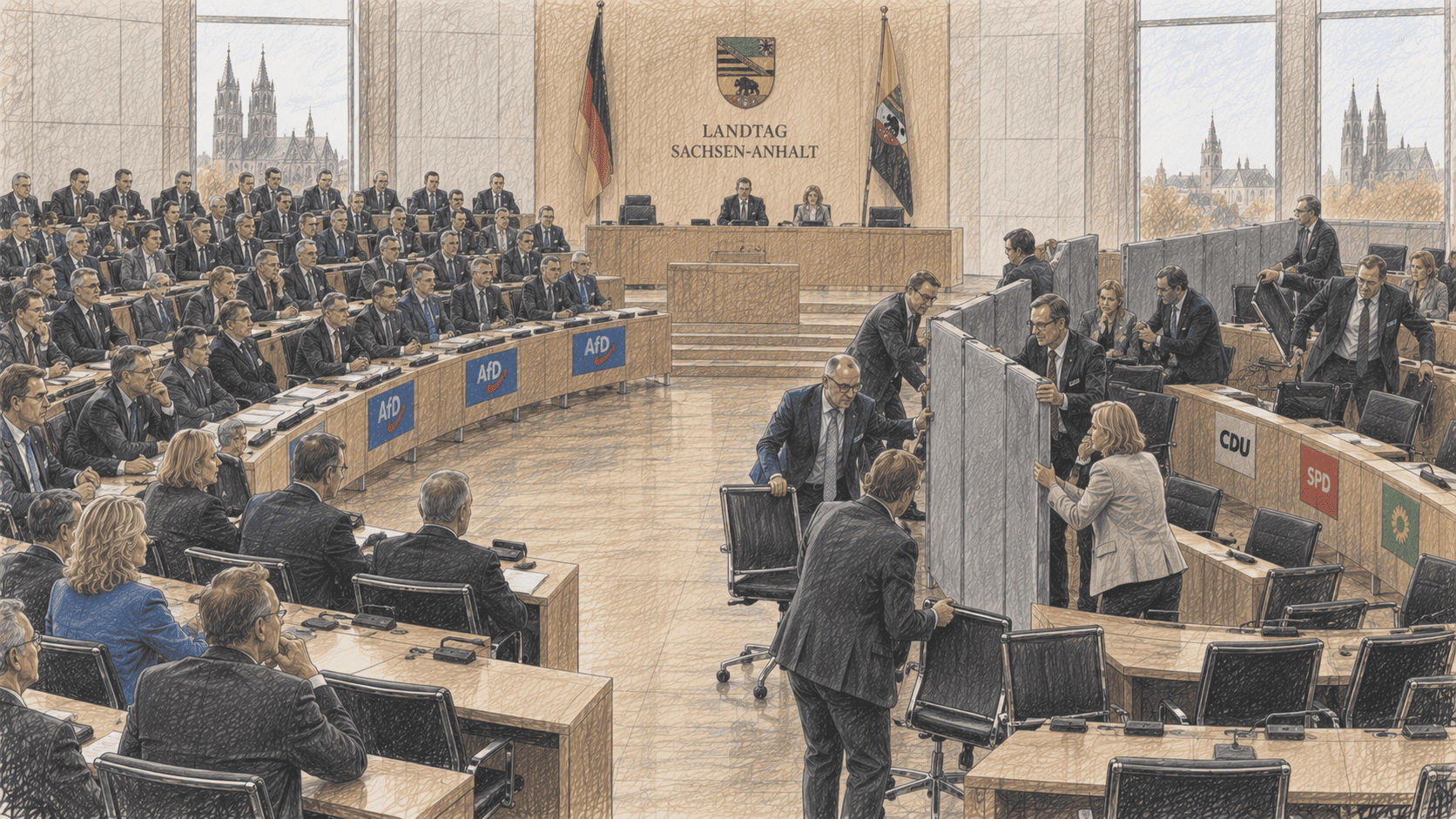
Germany’s political establishment has been hit by a result it can no longer easily contain. The AfD took just under 44 per cent in Saxony-Anhalt, leaving the CDU languishing at just over 17 per cent and putting the nationalist-populist party only three seats short of a majority.
Responsible Statecraft argues that the shock goes far beyond one eastern state – it puts Germany’s firewall against the AfD under acute strain and could eventually reshape Berlin’s approach to Russia and the Ukraine war. The uncomfortable question is whether excluding such a large electoral force can remain politically workable.
The firewall meets the numbers
Germany’s mainstream parties have long refused to let the AfD participate in government. Saxony-Anhalt makes that strategy much harder to execute.
The AfD secured 39 seats in the 83-seat parliament. The BSW, which won five, has signalled willingness to cooperate, although any arrangement would require negotiations.
The result leaves Germany facing an awkward contradiction: the firewall can keep the AfD formally outside government, but it cannot make its voters disappear.
The East is still angry
Responsible Statecraft stresses the enduring divide between eastern and western Germany.
Saxony-Anhalt and other former East German states continue to lag on important economic and social indicators, while resentment persists among people who believe the West still treats them as inferior outsiders.
The AfD has turned that discontent into electoral power. Ulrich Siegmund also softened the presentation, running a deliberately upbeat campaign rather than relying purely on grievance and confrontation.
Merz’s strategy is not working
Chancellor Friedrich Merz has tried to contain the AfD partly by tightening the CDU’s approach to migration and asylum while maintaining the firewall.
The numbers cited by the analysis suggest little success. Since Merz entered office, the AfD has climbed to 28 per cent nationally while the CDU has fallen to 22 per cent.
That creates an increasingly painful problem for Germany’s centre-right: copying parts of the AfD agenda has not necessarily brought its voters back, while refusing cooperation makes coalition-building progressively more difficult.
Coalition politics turns into a trap
The CDU also refuses alliances with the Left, narrowing its options even further.
Responsible Statecraft highlights an argument made by some analysts: forcing mainstream parties into broad coalitions to isolate the AfD can blur their political differences and strengthen the AfD’s claim that it represents the only genuine alternative.
That risks turning the firewall from a containment strategy into political ammunition for the party it was designed to exclude.
Ukraine enters the danger zone
Saxony-Anhalt itself has virtually no authority over German foreign and security policy. But the consequences could eventually reach Berlin.
The AfD opposes continued German support for Ukraine and favours a different relationship with Russia. If its electoral strength eventually opens the door to participation in state or federal government, Germany’s current foreign-policy direction could face much stronger domestic pressure.
Further eastern state elections will test whether Saxony-Anhalt was an exceptional result or part of a broader shift.
The hard lesson: Isolation cannot substitute for political support
Responsible Statecraft presents Saxony-Anhalt as a test of whether Germany’s established parties can maintain a firewall when the party outside it commands such a large share of the vote.
The AfD still faces major obstacles to governing. But Germany’s political centre now confronts a grim arithmetic problem – keeping the party out becomes harder as more voters put it first.