
World Center for Strategic Studies
From closed analysis to public debate

- MONTH
- YEAR

Germany’s Firewall Is Cracking: AfD Breakthrough Shakes the Political Order
Germany has crossed a political threshold that its mainstream parties can no longer dismiss as an eastern protest.
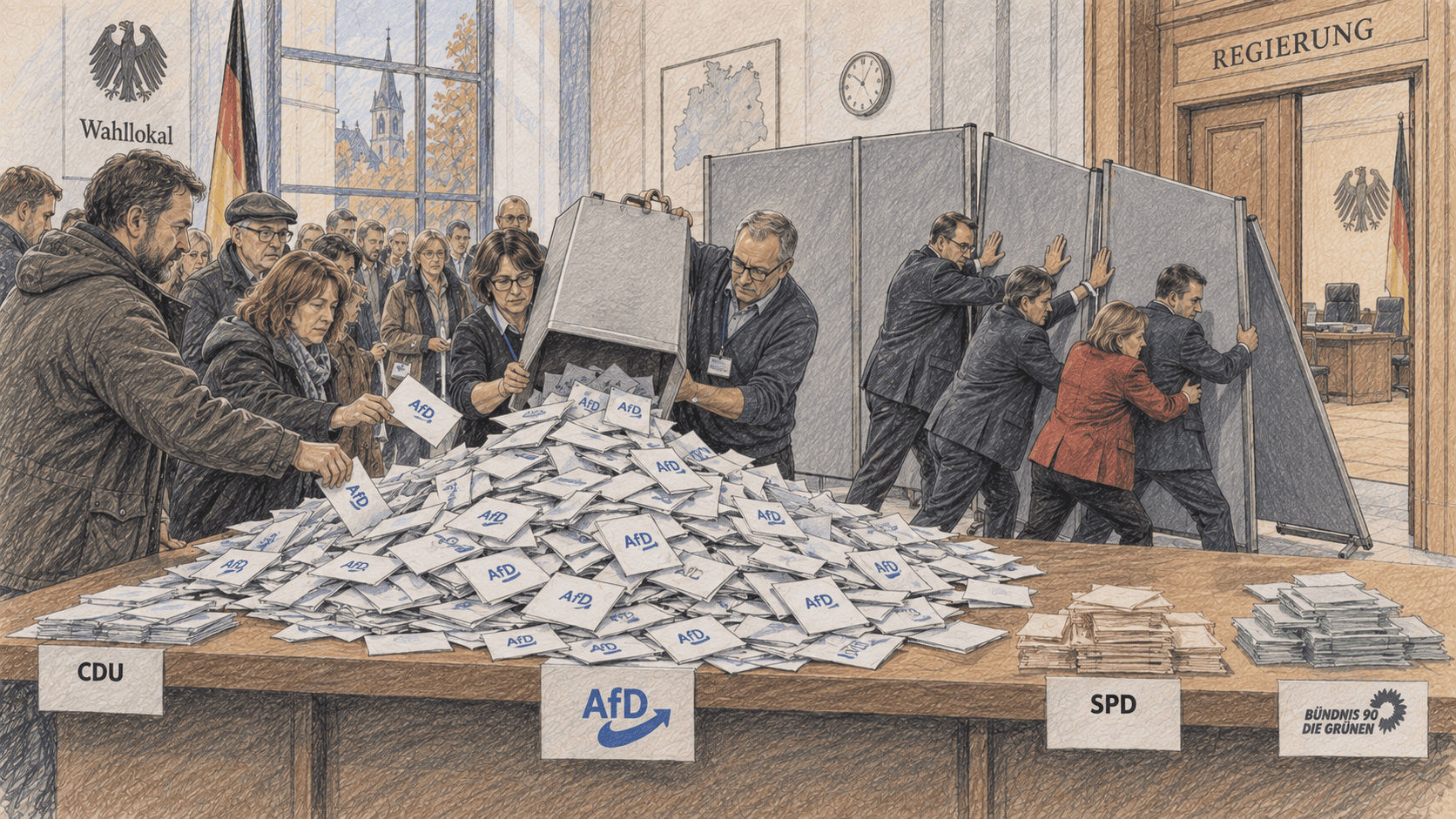
The AfD stormed to 43.8 per cent in Saxony-Anhalt, more than doubling its 2021 result and leaving it just three seats short of an outright majority.
Chatham House warns the bigger danger is not simply the result – it is that voters increasingly appear to want the AfD in power rather than merely using it to punish Berlin.
For Chancellor Friedrich Merz and the CDU, that turns a regional defeat into a warning about Germany’s entire post-war political system.
The protest vote is becoming something bigger
The most troubling shift is from rejection to active support. Before the 2021 election, only 9 per cent trusted the AfD most to solve the state’s problems. By July 2026 that figure had reached 36 per cent, while 44 per cent preferred an AfD-led government.
Ulrich Siegmund also dragged huge numbers of disengaged voters into the contest and took support directly from the CDU. The old assumption that AfD voters are simply angry protesters is looking increasingly shaky.
Decline gave the AfD its opening
Saxony-Anhalt has been battered by depopulation, shrinking public services and industrial pressure. High energy costs and weak demand are hurting its crucial chemical sector, while unemployment remains above the German average.
Corporate insolvency filings jumped 23.9 per cent in 2025 – more than twice the national increase. The AfD has successfully tied these economic fears to concerns over security, migration and abandonment by mainstream politicians.
The firewall is failing
Germany’s strategy of isolating the AfD may still block it from government, but it has plainly failed to stop its electoral advance.
The arithmetic is now ugly. The CDU, SPD and Greens cannot command a majority without help from the Left or BSW, while the CDU refuses cooperation with both the AfD and the Left. A prolonged political deadlock could allow the AfD to portray itself as the victim of an establishment determined to keep the election winner out of power.
Merz takes another hit
The result piles fresh pressure on an already unpopular Chancellor Merz. His CDU collapsed to just 17.2 per cent in Saxony-Anhalt, and another state election defeat could trigger demands inside the party for a change of strategy – potentially even renewed questions over his leadership.
The immediate danger comes in Mecklenburg-Vorpommern, where another strong AfD performance would make it much harder to dismiss Saxony-Anhalt as an isolated eastern shock.
Berlin’s institutions face a new test
An AfD-led state government could gain influence through Saxony-Anhalt’s four Bundesrat votes and potentially complicate close federal decisions.
Control of state institutions would be even more sensitive. The regional AfD has been classified as a right-wing extremist endeavour by the state intelligence service, putting future decisions on education, migration, policing, culture and official appointments under intense constitutional scrutiny.
The uncomfortable truth: Germany’s old political defences are weakening fast
Saxony-Anhalt represents only a small slice of Germany’s electorate, so this is not yet a nationwide political earthquake. But Chatham House sees the warning clearly: the AfD has shown that it can turn frustration into positive enthusiasm and come within touching distance of power.
If that formula spreads, Germany’s mainstream parties will face a problem far bigger than one rebellious eastern state.