World Center for Strategic Studies
From closed analysis to public debate
- MONTH
- YEAR

Europe’s Nuclear Comfort Zone Cracks: The Threshold Trap Spreads
Carnegie’s paper warns that the nuclear danger is no longer just about who has the bomb.
The more awkward problem is the growing zone just below it – states building the ability to go nuclear fast while denying they have crossed the line.
Iran is the loudest case, but not the only one.
As US security guarantees look less automatic, allies and rivals alike may start asking whether sitting near the nuclear threshold is safer than trusting old promises.
That is where Europe should get nervous.
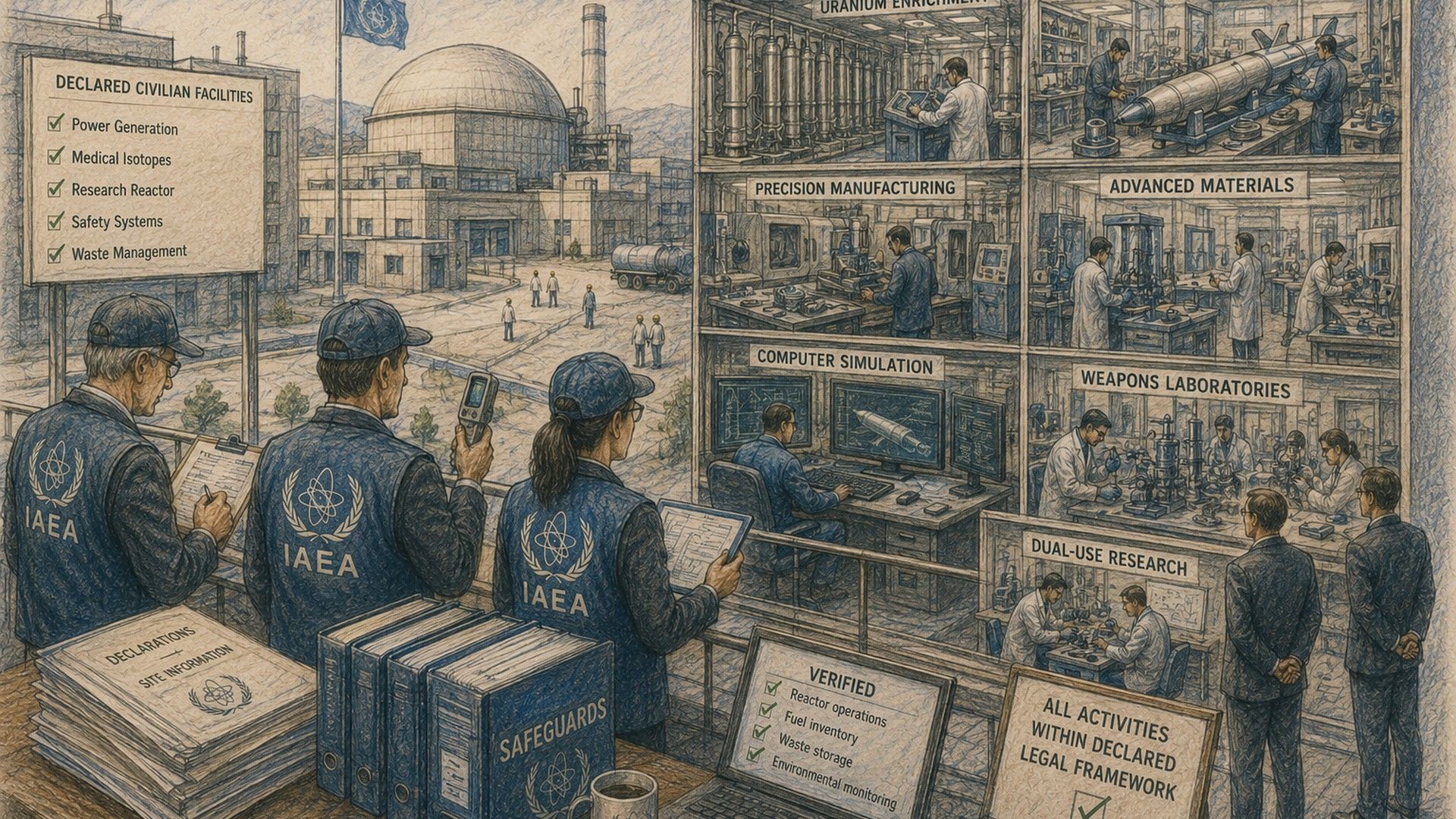
The bomb without the badge
The study defines a nuclear threshold state as one that has built the means to acquire at least one nuclear explosive device within roughly three to six months of a political decision.
That is not full weapons possession. But it is far beyond innocent nuclear know-how.
It means a state has moved close enough to the line that outsiders must ask a frightening question: is this peaceful capacity, a bargaining chip, or a weapons programme waiting for the final order?
Ambiguity is the weapon
The threshold is dangerous because it lives in the grey zone.
A state can pile up fissile material, weaponisation expertise, delivery systems, military planning and political strategy without necessarily conducting a test or declaring itself nuclear-armed.
That gives it leverage without the full cost of open breakout. It can frighten enemies, reassure domestic hardliners, bargain with the West and still claim it has not violated the formal line.
The law leaves a gap
Carnegie’s most sobering point is that threshold status is not clearly banned.
The Non-Proliferation Treaty and the Treaty on the Prohibition of Nuclear Weapons prohibit weapons acquisition, but they do not clearly define or outlaw the build-up of every capability needed to make weapons quickly.
That loophole matters. A country can move dangerously close to the bomb while staying inside a contested legal and diplomatic fog.
Iran shows the danger
Iran dominates the policy debate because it has accumulated capabilities that make the threshold question impossible to dodge.
High-level enrichment, advanced nuclear know-how and military-relevant capabilities force Washington, Europe and the IAEA to judge not just what Iran has, but what its leaders intend.
That is the nightmare. Capabilities can be measured. Intentions can shift overnight.
Allies are watching Washington
The paper also warns that the threshold temptation may grow among US allies.
If countries fear that American protection is weakening, some may decide they need a national nuclear option, or at least the ability to build one quickly. The analysis points to debate in places such as South Korea, Poland and Finland as signs of a wider mood change.
For Europe, this is a serious alarm. If trust in the US umbrella fades, nuclear hedging could stop being a fringe idea and become a mainstream security debate.
Europe gets a harder problem
A Europe already struggling with Russia, defence gaps and US unpredictability now faces a more complex nuclear landscape.
It is not enough to watch for open bomb-building. Policymakers must track the whole chain: political intent, fissile material, weaponisation, delivery vehicles and militarisation.
That demands intelligence, inspection, diplomacy and pressure working together. Miss the pattern, and a threshold state can reach the edge before Europe has even agreed what it is seeing.
Punishment alone may fail
Carnegie does not offer a simple crackdown fantasy.
Banning threshold status outright may be legally and technically unrealistic. But accepting it passively would be reckless. The paper argues for heavier liabilities, stronger transparency demands and credible reassurances from states that move near the line.
The goal is to make the threshold less comfortable, less useful and less attractive.
The hard lesson: The grey zone is becoming the danger zone.
Carnegie’s warning is blunt: the world has spent too long treating the nuclear threshold as a passing stage before the real crisis. It is now a strategic position in its own right.
For Europe and the United States, that means old non-proliferation tools are not enough.
The next nuclear crisis may not begin with a test. It may begin with a state saying it has not crossed the line – while standing close enough to sprint.