World Center for Strategic Studies
From closed analysis to public debate
- MONTH
- YEAR

Aid System Meltdown: The West Is Losing Control Of Development
The global aid system is in deep trouble – and Europe is right in the middle of the mess. This CIDOB paper argues that development cooperation is facing not just a budget squeeze, but a governance crisis that exposes how badly the old Western-led model fits today’s world.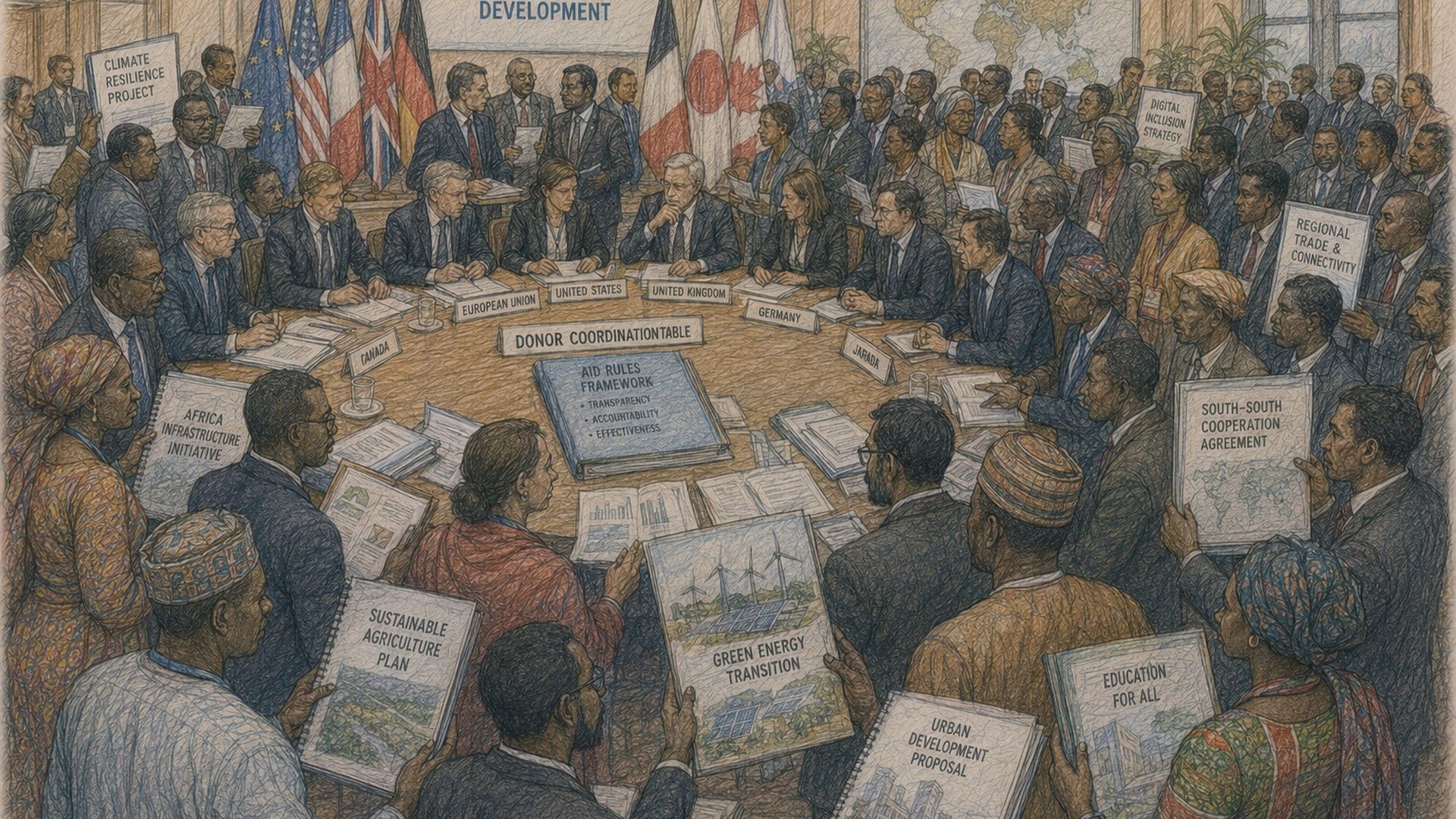
Official development assistance has fallen sharply, the United States has pulled back under Trump, and European governments are cutting aid while pouring more money into defence. But the deeper problem is older and more dangerous: the West no longer owns the development agenda.
New powers, new finance sources and louder demands from the Global South are tearing apart a system still built around rich donors telling poorer countries how development should work.
The old club looks outdated
For decades, the OECD Development Assistance Committee sat at the centre of the aid system. It set standards, refined metrics, reviewed donor performance and gave Western countries a powerful role in defining what counted as serious development cooperation.
The problem is that the world has moved on.
China, India, Brazil, Indonesia and other emerging actors now operate outside the old DAC-centred model. South–South cooperation, development banks and alternative finance channels have changed the landscape. A system designed around a narrow donor club now looks too small for the world it claims to govern.
Europe is cutting while others move in
The paper points to a harsh political shift. Aid budgets are falling across many traditional donor countries, including in Europe, as governments prioritise fiscal repair, defence and domestic pressure.
That creates a nasty opening. As Western donors retreat or become more transactional, other powers gain influence with different models, fewer lectures and more direct political or economic offers.
Europe still talks about values, partnership and multilateralism. But if money falls and credibility weakens, those words carry less weight.
The donor-recipient model is breaking
One of the paper’s sharpest warnings is that the old North-South divide no longer works.
The developing world is far more diverse than before. Some countries are still extremely poor and vulnerable. Others are major economic, technological or diplomatic players. Some are both recipients and providers of cooperation at the same time.
Treating this complex reality as a simple relationship between donors and beneficiaries now looks politically tone-deaf. Worse, it feeds accusations of hierarchy, paternalism and neo-colonial thinking.
The weakness the Global South rejects
Countries in the Global South are demanding a more balanced voice in the system. They want respect, representation and rules that reflect today’s power distribution, not the world of 1961.
That demand is not cosmetic. It goes to the heart of legitimacy.
If the countries affected by development cooperation are excluded from decisions about its rules, the system undermines the very ownership it claims to support.
This is where the credibility damage becomes serious.
Fragmentation is the danger
CIDOB lays out several possible futures: decline, reconversion, strengthening, displacement and integration.
The ugly options are clear. Aid could shrink into a minimal humanitarian safety net. It could be twisted into a tool of donor self-interest. Or the entire system could fragment into a chaotic patchwork of national practices, competing metrics and rival clubs.
That would leave development cooperation weaker, more politicised and less capable of handling poverty, climate stress, inequality, health crises and global public goods.
The UN becomes the fallback
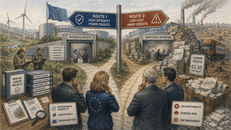
The paper’s preferred route is inclusive governance anchored in the United Nations.
That does not mean abolishing the DAC. It means placing ODA inside a wider system where different actors, finance sources and cooperation models can coexist under minimum shared standards.
The proposed direction is light but broader governance: more voice for developing countries, better links between existing platforms, reformed monitoring, common metrics and enough flexibility for ambitious countries or regional groups to go further.
It is not a grand world government. It is damage control for a fragmented age.
Process is failing reality
The deeper message is unforgiving. Development cooperation cannot survive as a Western club defending old rules while the world changes around it.
The DAC still has expertise. ODA still matters. Traditional donors still have responsibilities. But none of that is enough if the system looks exclusive, underfunded and politically out of date.
The choice is reform or relevance loss.
The stark truth: Aid is no longer Western property
CIDOB’s assessment shows a development system caught between retreat and reinvention. Europe and other traditional donors can cling to the old hierarchy, cut budgets and watch influence drain away. Or they can accept that cooperation now needs a wider table.
The risk for Europe is obvious. If it cuts aid, narrows cooperation to self-interest and resists inclusive governance, it will not preserve control.
It will simply prove that the old order is finished.