World Center for Strategic Studies
From closed analysis to public debate
- MONTH
- YEAR

Europe’s Factory Fantasy: Dunkirk Works, Brussels Wobbles
POLITICO’s report turns Dunkirk into a warning for Europe’s industrial dream.
A once-depressed steel and port region in northern France has dragged itself back into the game with batteries, green steel, logistics and heavy investment.
Brussels wants to copy that story across the EU as it scrambles to rebuild manufacturing and compete with China and the United States.
But the catch is harsh: Dunkirk’s revival was not produced by a neat EU slogan.
It took land, power, ports, local discipline, state muscle and investors willing to bet big.
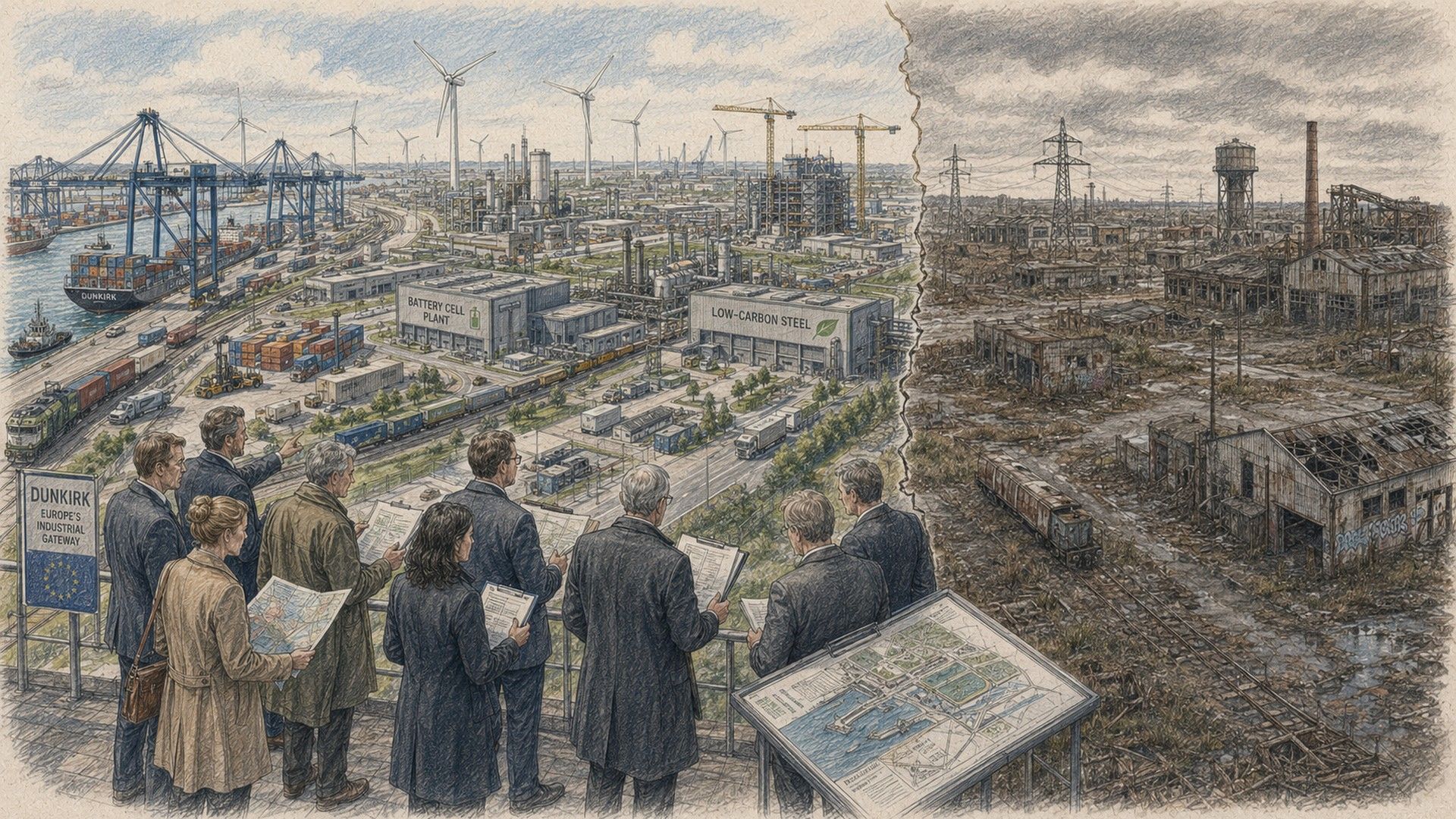
Dunkirk beats the decline script
Dunkirk had every mark of Europe’s old industrial pain: lost jobs, fading heavy industry and a region left behind by globalisation.
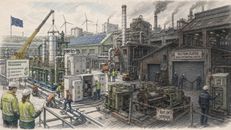
Now it has become a showcase for green reindustrialisation. Battery factories, low-carbon steel projects, recycling plans and port-based logistics are turning the area into one of France’s most watched industrial clusters.
That matters because Europe badly needs proof that the green transition can mean factories and wages, not just regulations and closures.
Brussels wants the magic copied
The European Commission sees the lesson clearly.
Europe cannot rely forever on Chinese batteries, American subsidies or imported clean technology. It needs domestic production, stronger supply chains and new industrial jobs in places that have been hollowed out.
Dunkirk gives EU officials a seductive image: a struggling region reborn through clean industry. The problem is that images are easy. Replication is not.
France did not wait for theory
The French state helped make Dunkirk investable.
Paris used subsidies, industrial planning, local coordination and political pressure to pull companies into the region. The port mattered. Available land mattered. Nuclear-backed low-carbon electricity mattered. A long industrial culture mattered too.
That combination is not sitting ready in every European town. Many regions have the ambition but not the infrastructure, the grid connection, the workforce, the permits or the cash.
The EU’s toolkit looks too thin
Brussels can pass industrial acts, relax state-aid rules, encourage “Made in Europe” criteria and launch funding schemes.
But it cannot easily create cheap energy, deep ports, trained workers or local political alignment by directive. That is the weakness POLITICO exposes.
Europe keeps pretending industrial revival can be managed from policy documents. Dunkirk suggests it is built from pipes, cables, land, factories and ruthless administrative focus.
China still sets the pressure
The revival story is also a fear story.
Europe is racing because China dominates major clean-tech supply chains and can flood markets with cheaper batteries, panels and components. The United States has its own industrial pull through subsidies, tariffs and a bigger capital market.
Dunkirk shows Europe can attract projects. It does not prove Europe can win the wider industrial war.
Jobs bring new strain
Success also creates pressure.
A region that attracts factories needs housing, transport, schools, training, public services and workers fast enough to keep up. Industrial revival can become its own stress test if local infrastructure lags behind investment.
That is the awkward side of Europe’s factory comeback. Reindustrialisation is not just a ribbon-cutting ceremony. It is a social and planning challenge.
Not every town becomes Dunkirk
The harshest lesson is that some places will lose.
If Europe’s green industrial strategy depends on clusters with ports, energy access, skills and state backing, then weaker regions may fall further behind. The EU may talk about balanced development, but capital flows to places that can deliver.
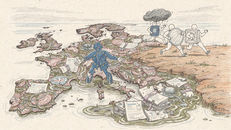
That risks creating a new industrial map: a few winners with gigafactories, and many regions left watching from the sidelines.
The last word: Dunkirk is the exception, not the model.
POLITICO’s warning is clear. Europe can learn from Dunkirk, but it cannot mass-produce Dunkirk by passing another Brussels package.
The EU needs factories, not fantasies. It needs grids, skills, speed and money at a scale that matches the threat.
Dunkirk shows revival is possible. It also shows how much of Europe is not ready to repeat it.