World Center for Strategic Studies
From closed analysis to public debate

- MONTH
- YEAR

Europe’s Frontiers Are Under Pressure – And Its Old Security Order Is Weakening
Europe is confronting a geopolitical problem that extends far beyond the war in Ukraine. In a Geopolitical Futures analysis, Ridvan Bari Urcosta argues that European security has historically depended on influence over the territories surrounding the continent, not merely on defending its internal borders. That strategic position is now under pressure as Russia challenges Europe's eastern frontier and the post-1945 American security framework becomes less dependable. The central concern is whether European states can protect their interests in neighbouring regions without the dominance they once exercised or the external guarantees on which they have long relied.
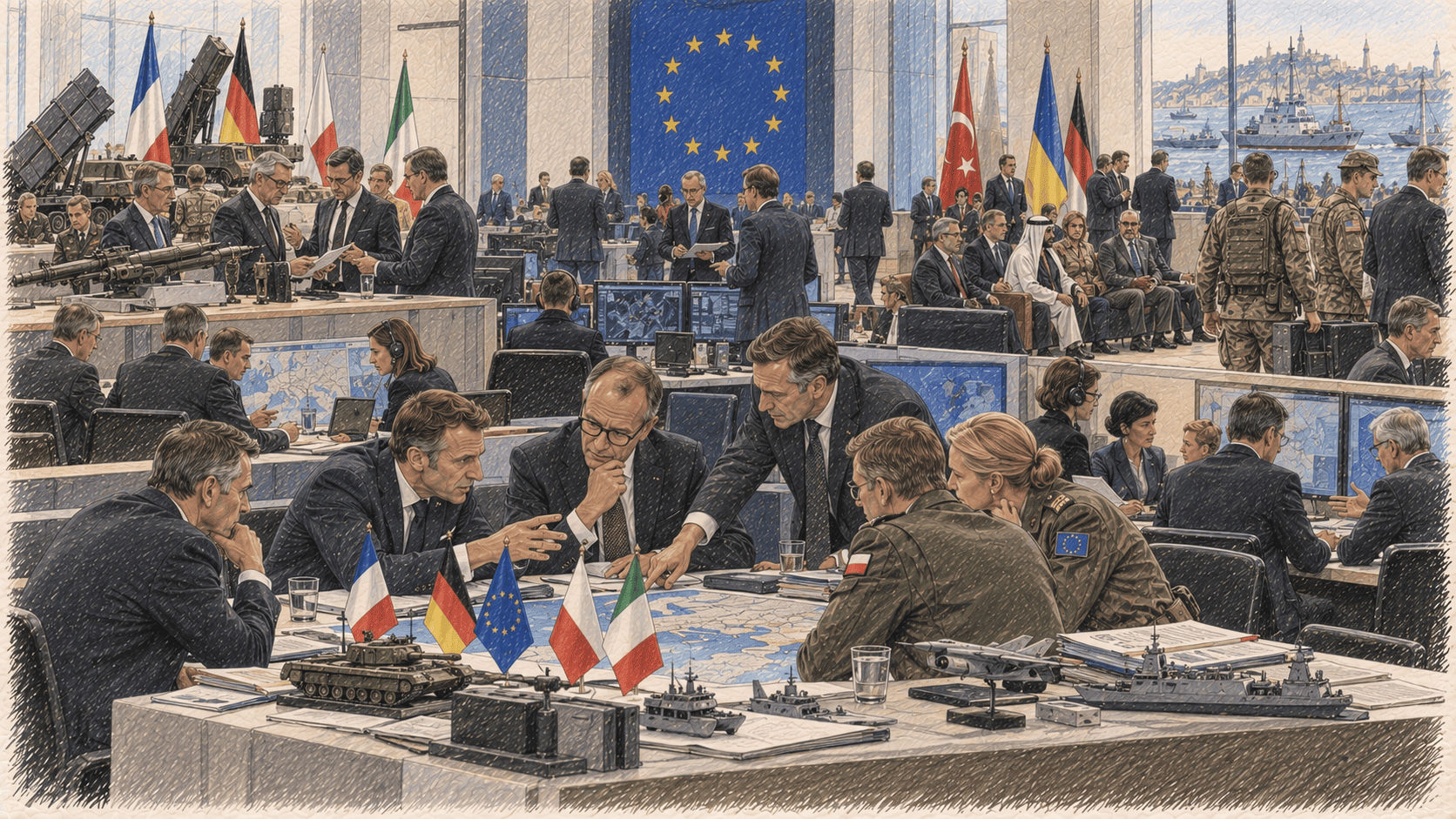
Europe's security has always depended on its periphery
Urcosta places today's pressures in a longer historical context.
The decline of Ottoman power, Russia's expansion into Crimea and Poland, and the emergence of European colonial empires helped establish the strategic environment in which European powers operated.
Control over surrounding territories and access routes shaped the continent's security for centuries.
The analysis suggests that Europe's present difficulties cannot be understood solely through the institutions created after 1945.
Russia is challenging the eastern frontier
Russia's war against Ukraine has made the eastern European security environment a central concern.
The conflict raises questions about territorial control, military influence and the future relationship between Europe and Russia.
For European governments, the challenge extends beyond supporting Ukraine. It also concerns the security arrangements that will eventually govern Europe's eastern neighbourhood.
The American guarantee is becoming less certain
The postwar European security system relied heavily on US military power.
As that framework weakens, European governments face greater responsibility for managing threats around their continent.
Urcosta's historical perspective highlights the significance of this change: Europe must consider how to defend its interests when the external power that helped stabilise its security environment is less dependable.
The Eastern Mediterranean adds another dimension
Europe's frontier challenges are not confined to its eastern land borders.
The Eastern Mediterranean connects European security with developments in the Middle East and surrounding regions.
Its importance reflects a wider geopolitical reality: instability near Europe can affect the continent even when it originates beyond EU or NATO territory.
The region therefore belongs in any broader assessment of Europe's changing strategic position.
The problem is larger than military spending
Increasing defence expenditure can strengthen European capabilities, but the underlying question is geopolitical.
Europe must determine where its essential security interests lie, how developments in neighbouring regions affect them and which partnerships can help protect those interests.
A stronger military posture alone does not settle these questions.
The warning sign: Europe's security depends on more than borders
Urcosta's analysis presents Europe as a continent adjusting to the erosion of two historical advantages – its former dominance over surrounding regions and the security framework established under American leadership.
The challenge is to develop a workable approach to neighbouring powers and contested frontiers in a less predictable international environment.
Note: The full article is subscriber-only. This is a limited abstract based on its publicly accessible introduction and the author's stated scope, rather than a verified summary of the complete analysis.