World Center for Strategic Studies
From closed analysis to public debate

- MONTH
- YEAR

Europe’s Defence Patchwork Is Growing Out of Control – And Brussels Risks Losing the Plot
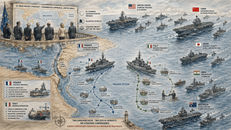
Europe is building military partnerships at extraordinary speed, but the resulting network is becoming increasingly difficult to coordinate. An Egmont Institute policy brief by Noam Peisih identifies more than 160 bilateral and small-group defence arrangements involving EU countries, Britain and Ukraine since 2014. Russia’s war, doubts about American security guarantees and frustration with slow EU decision-making have encouraged governments to establish their own operational structures. Yet this proliferation creates a strategic problem: Europe may have more military cooperation than ever without a coherent system for using it. Peisih argues that Brussels should connect existing forces rather than attempt another politically divisive defence overhaul.
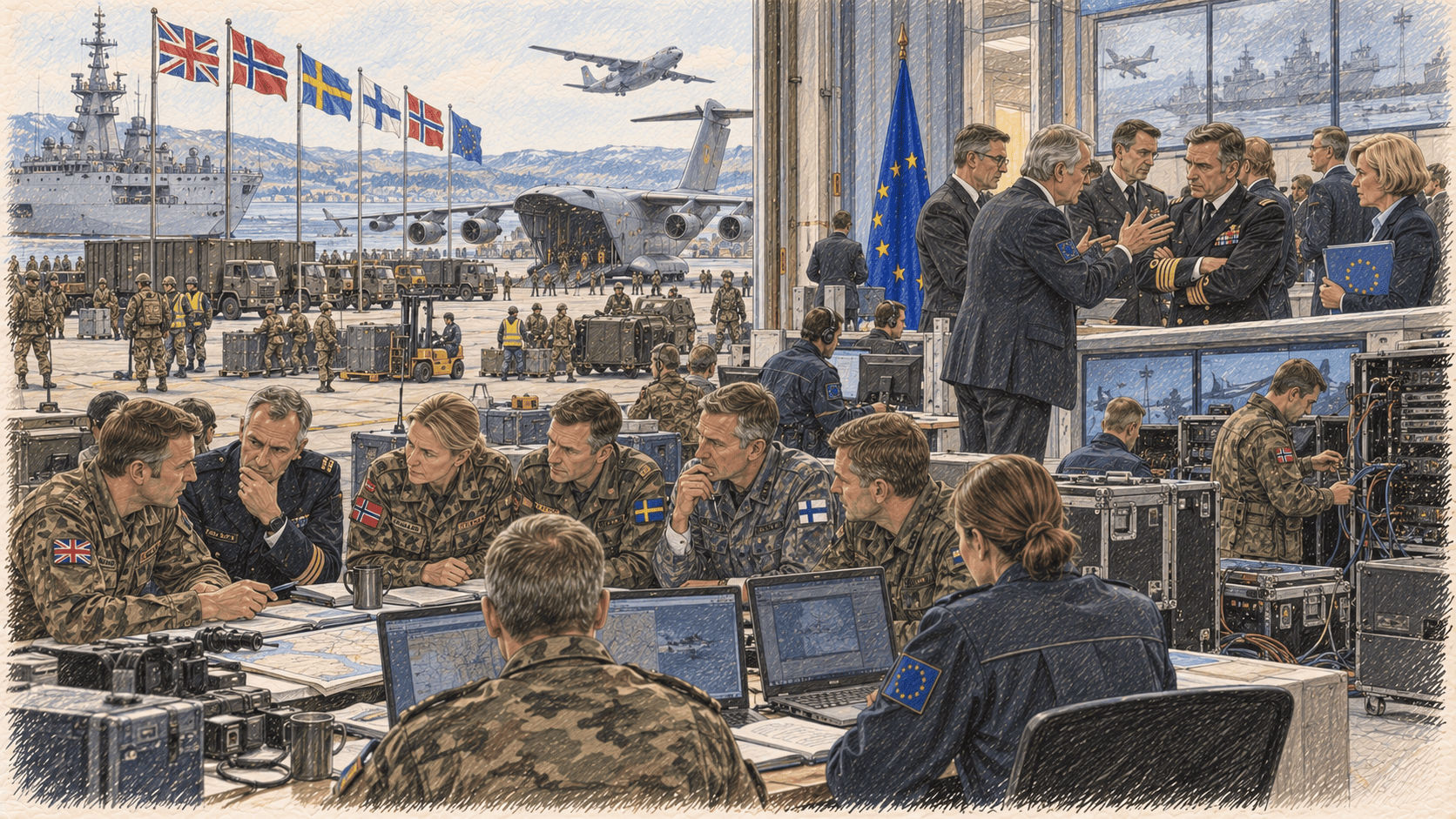
Europe has built 160 overlapping arrangements
The growth of smaller defence partnerships reflects governments' search for faster and more flexible responses to security threats.
These arrangements cover operational cooperation, military capabilities and defence industry projects.
They allow participating countries to act without waiting for consensus across NATO or the EU.
But the more such groups emerge, the harder it becomes to coordinate their activities and integrate them into wider European security planning.
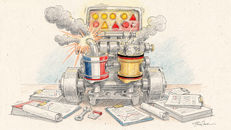
Brussels' own defence structures have disappointed
Peisih argues that EU-led operational defence initiatives have struggled to deliver their promised results.
Permanent Structured Cooperation has produced less than initially expected, while the EU Battlegroups have failed to become a convincing operational instrument.
National governments remain reluctant to surrender authority over territorial defence or military deployments.
Even as confidence in American security guarantees weakens, they generally prefer cooperation with selected partners over transferring operational control to Brussels.
The result is a growing gap between European defence activity and EU institutional authority.
NATO remains essential but cannot solve everything
NATO continues to provide the central framework for European territorial defence.
However, uncertainty surrounding Washington raises questions about what happens if NATO cannot respond quickly or decisively during a crisis.
Smaller coalitions can offer alternatives because they operate with fewer political constraints.
The problem is that many maintain no systematic relationship with EU military planning.
Europe therefore needs coordination mechanisms that work even when its largest institutions are politically constrained.
New headquarters could make fragmentation worse
Peisih rejects creating another layer of EU military bureaucracy.
Additional agencies, headquarters or battlegroups would consume resources and personnel already under pressure.
More importantly, governments might resist any attempt to place existing coalitions under direct EU authority.
That could simply encourage them to establish new arrangements outside Brussels' control.
The proposed alternative is deliberately modest: formal cooperation agreements between existing defence groups and EU institutions.
Europe already has working examples
EUROCORPS and the European Air Transport Command demonstrate that operational formations can cooperate with Brussels without becoming subordinate to it.
EUROCORPS maintains a formal relationship with the EU Military Staff, updated in August 2025.
The European Air Transport Command cooperates with the European Defence Agency on matters including military mobility and standardisation.
Peisih proposes extending this approach through memoranda of understanding and letters of intent.
EU liaison officers could be embedded in coalition headquarters as observers, improving information exchange and crisis planning without acquiring command authority.
Britain could become the crucial partner
The UK-led Joint Expeditionary Force is presented as a particularly promising candidate.
It has an established headquarters, regular exercises and a defined operational focus. Although designed around NATO standards, it can participate in operations under different international frameworks.
Its membership includes non-EU countries, notably Britain, Norway and Iceland.
A formal agreement with EU institutions could strengthen post-Brexit security cooperation while preserving the force's independence.
It would also demonstrate that European defence coordination need not be limited by EU membership.
Financial incentives could encourage cooperation
Brussels could make participation more attractive by offering favourable access to existing defence-financing instruments.
Peisih suggests possible incentives involving SAFE loans and European Defence Fund co-financing for countries participating in coalitions linked to EU institutions.
But funding would remain secondary to operational coordination.
The priority is to establish communication channels before a crisis, allowing governments and military planners to exchange information without improvising arrangements under pressure.
The proposal has clear limits
Formal agreements would not give Brussels command over independent military coalitions.
Participating governments would retain the freedom to decide whether and how their forces operate.
Consequently, the EU could improve preparedness and coordination without guaranteeing that these formations would support its decisions.
Peisih accepts this limitation as the price of a politically achievable arrangement.
The hard lesson: Europe needs coordination, not another defence bureaucracy
Egmont's central argument is that European governments have already created much of the military cooperation Brussels needs, but largely outside EU institutions.
Trying to absorb these structures would provoke resistance and could produce further fragmentation.
Connecting them through practical agreements offers a less ambitious but potentially faster route towards greater readiness.
Europe's immediate challenge is not to invent another defence architecture. It is to make the existing one function coherently when a crisis demands rapid action.