World Center for Strategic Studies
From closed analysis to public debate

- MONTH
- YEAR

Europe’s Budget Has a French Weak Spot – And Brussels Is Running Out of Time
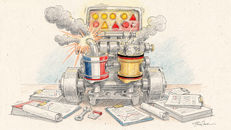
The EU’s next budget could be agreed – and still be thrown into turmoil by one powerful member state. DGAP warns that a future French government challenging EU contributions could exploit national ratification rules, demand a rebate or, in the most extreme scenario, simply withhold part of France’s payments.
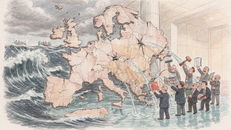
France matters because it is a major net contributor, meaning a confrontation would leave other governments facing cuts, higher bills or financial instability. With crucial elections approaching in 2027, Europe has a narrow window to make its budget harder for any single government to disrupt.
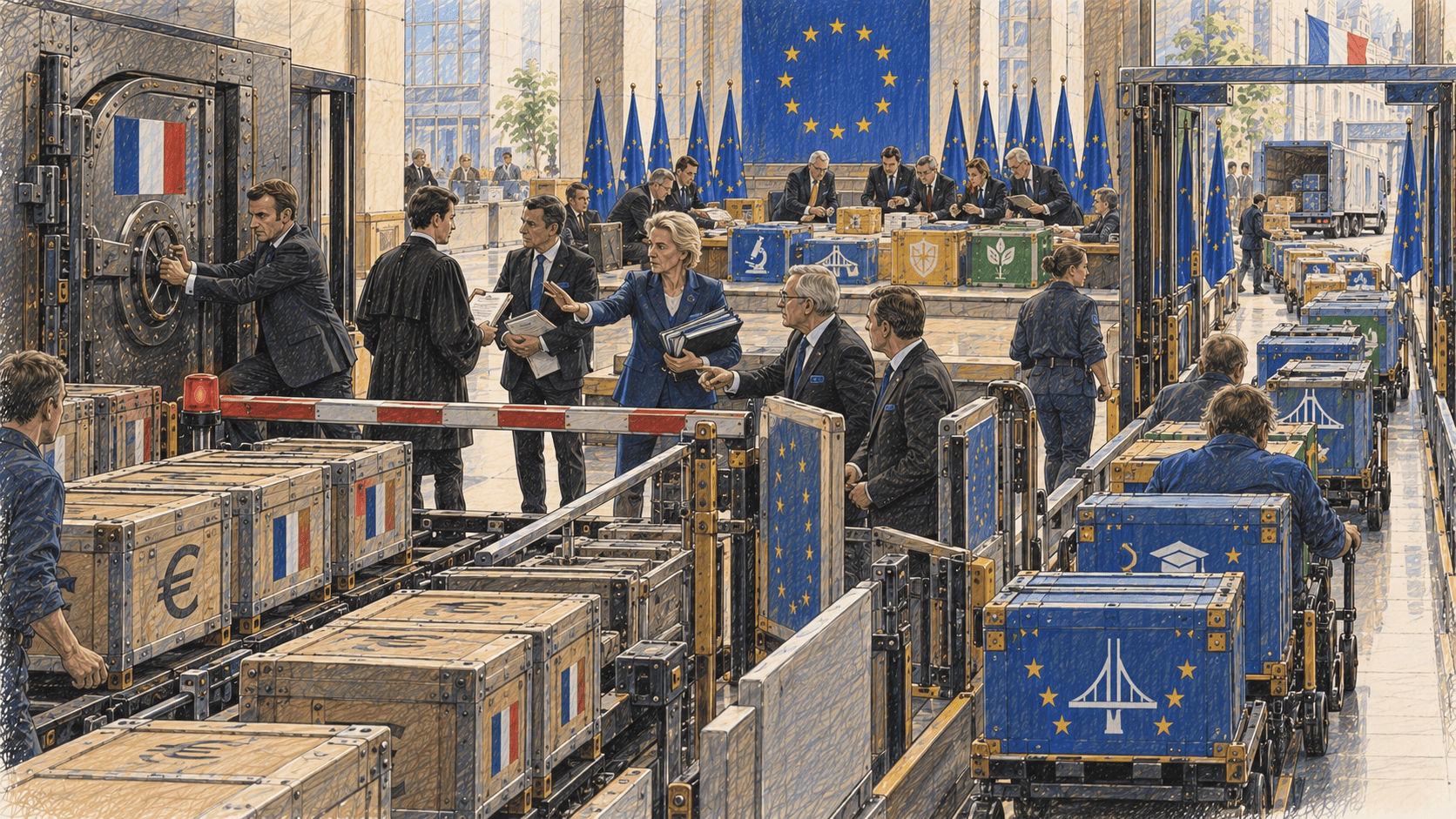
France could reopen the deal
Agreeing the EU’s next Multiannual Financial Framework will not finish the battle.
The revenue arrangements must still pass national ratification. DGAP argues that a French government seeking lower contributions could use this stage to demand a rebate and effectively reopen negotiations.
The numbers are painful. Cutting France’s contribution by roughly €12 billion annually would require either lower EU spending or other countries to pick up the missing share – with Germany potentially carrying roughly a quarter of it.
One holdout could squeeze Brussels
A more aggressive French government could refuse to ratify the EU’s new Own Resources Decision.
The Union could still operate under existing revenue rules, but the financial safety margin protecting EU borrowing and liabilities would shrink sharply. That could undermine confidence and raise financing costs.
If annual budget negotiations were also blocked, spending could fall back onto restrictive provisional arrangements, forcing severe cuts across EU programmes.
The bombshell exposes a nasty loophole
DGAP’s most extreme scenario is also the most revealing: France simply stops paying part of what it owes.
That would breach EU law, but Brussels lacks an immediate financial weapon capable of forcing the money out of Paris. Late-payment penalties cannot simply be seized, while the Commission cannot automatically deduct the missing contributions from EU funds flowing back to France.
A government could therefore violate its payment obligations while remaining entitled to EU programme money as legal proceedings grind forward.
Europe built the wrong defences
The EU has developed mechanisms designed to protect its finances from rule-of-law breaches, particularly after years of confrontation with Hungary.
But those instruments were not designed neatly for a large net contributor deliberately withholding payments.
The Commission could launch infringement proceedings before the European Court of Justice. That is legal pressure – not an instant solution to a hole in the budget.
Germany could inherit the bill
Berlin has an obvious reason to act before the problem materialises.
DGAP urges Germany to push for an MFF agreement by the end of 2026 so national ratification can advance before the 2027 election cycle creates fresh opportunities for disruption.
It also suggests Berlin consider sacrificing its own rebate as a bargaining chip rather than giving another government an excuse to demand special treatment.
Dependence on national cash is the deeper flaw
Around two-thirds of EU budget revenue currently comes from contributions linked to member states’ gross national income.
That leaves Brussels heavily dependent on national governments continuing to honour the bargain.
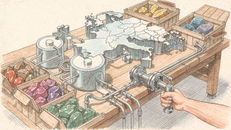
DGAP therefore wants more genuine EU own resources – revenue streams less exposed to political confrontation inside individual member states. The more Brussels can finance itself independently, the harder it becomes for one capital to hold the entire system hostage.
The key point: Europe’s budget is easier to disrupt than it looks
The scenarios remain hypothetical and depend on future election results, while deliberately withholding contributions would carry enormous legal and political costs.
But DGAP’s warning is institutional rather than electoral: the EU has built a financial architecture that assumes governments will ultimately respect the deal. If a major net contributor stops playing by those rules, Brussels has surprisingly few fast answers.