World Center for Strategic Studies
From closed analysis to public debate

- MONTH
- YEAR

Britain’s Asylum Crisis Spills Onto the Streets
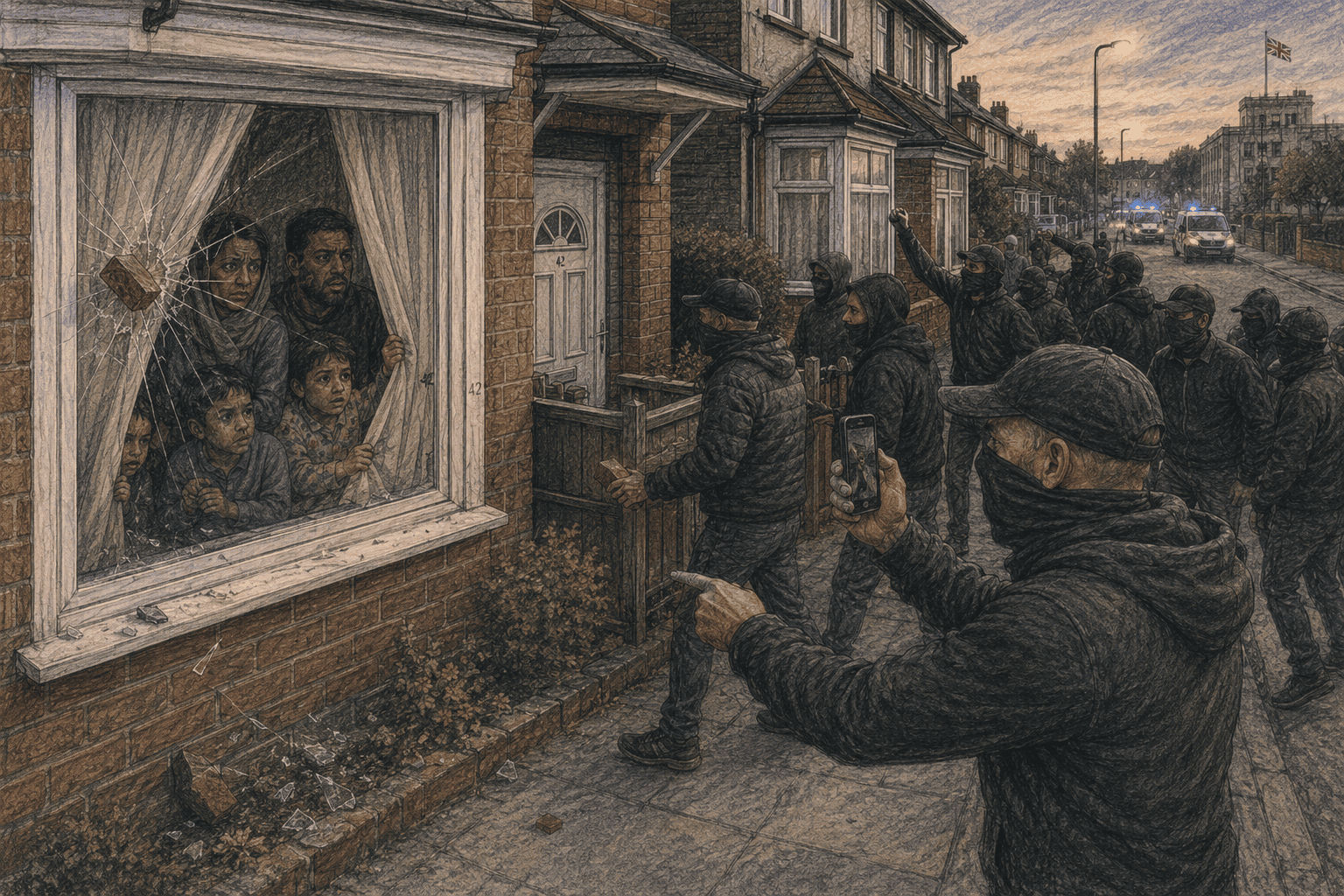
Britain’s migration row is moving into a more dangerous phase as far-right activists shift their attention from asylum hotels to ordinary residential homes. The report shows vigilantes identifying houses used to accommodate asylum seekers, circulating addresses online and turning local anger into direct intimidation and violence.
As the Government moves more people out of hotels and into houses of multiple occupation, the security problem is becoming harder to contain. The result is an ugly policy trap: Britain wants cheaper, less visible accommodation – but may be creating softer targets with far less protection.
The targets are getting smaller – and easier
Asylum hotels have long attracted protests and riots, but houses of multiple occupation are now emerging as the next flashpoint.
Unlike hotels, these properties sit inside normal residential streets and often lack permanent guards or CCTV. That leaves asylum seekers more exposed just as activists are becoming more organised about finding where they live.
Vigilantes are building the map
The escalation is not happening by accident.
Online accounts are encouraging supporters to identify asylum accommodation using council information, Freedom of Information requests and even artificial intelligence. Calls to build nationwide databases of properties risk turning scattered protests into a coordinated targeting system.
In Thetford, police are investigating how homes were identified after crowds smashed windows and attempted to force their way inside. A man was arrested over the sharing of addresses.
Violence is replacing protest
The distinction between political opposition and intimidation is becoming dangerously thin.
Properties linked to migrants have already been attacked or burned in Belfast and Ballymena, while disorder in Thetford forced residents from their homes. Experts warn that successful attempts to drive migrants out could encourage copycat action elsewhere.
More than 20 people were arrested over the Thetford disorder for alleged offences ranging from assault to aggravated burglary and racial hatred.
Westminster created a security gap
The Government is reducing dependence on expensive asylum hotels and expanding dispersal accommodation instead.
By March, around 20,900 asylum seekers remained in hotels, while roughly 68,700 were living in HMOs and other dispersed accommodation.
That shift solves one political headache but creates another. Hotels are highly visible and unpopular, yet easier to secure. Residential properties attract less attention initially – but once identified, their occupants can be far more vulnerable.
Social media is pouring fuel on the fire
Claims that asylum seekers pose threats to women and children are spreading rapidly online, often without evidence.
Analysts warn that extremist narratives no longer need formal far-right organisations to travel. Short videos, accusations and rumours can move through mainstream social networks and local community groups before authorities have much chance to respond.
This will test Britain’s migration system
The Home Office says threats and intimidation are unacceptable and that it is working with police and accommodation providers on security.
But the deeper problem is structural. Britain cannot quietly disperse tens of thousands of asylum seekers into communities while assuming their locations will remain unknown or that local tensions will manage themselves.
If every new accommodation model becomes another focus for unrest, ministers will face shrinking options and rising security costs.
The ugly reality: Britain is losing control of the fallout
Moving asylum seekers out of hotels was supposed to reduce costs and political pressure. Instead, the confrontation is following them into residential streets.
If vigilante targeting spreads, the asylum accommodation crisis will no longer be just about boats, hotels or government spending. It will become a public-order problem inside ordinary British communities.