World Center for Strategic Studies
From closed analysis to public debate

- MONTH
- YEAR

France’s Missile Superpower Dream Faces a Reality Check
France wants to become Europe’s undisputed missile powerhouse. From long-range cruise missiles and ballistic systems to hypersonic weapons and next-generation strike capabilities, Paris is investing heavily in a vast arsenal designed to strengthen both national deterrence and European military autonomy.
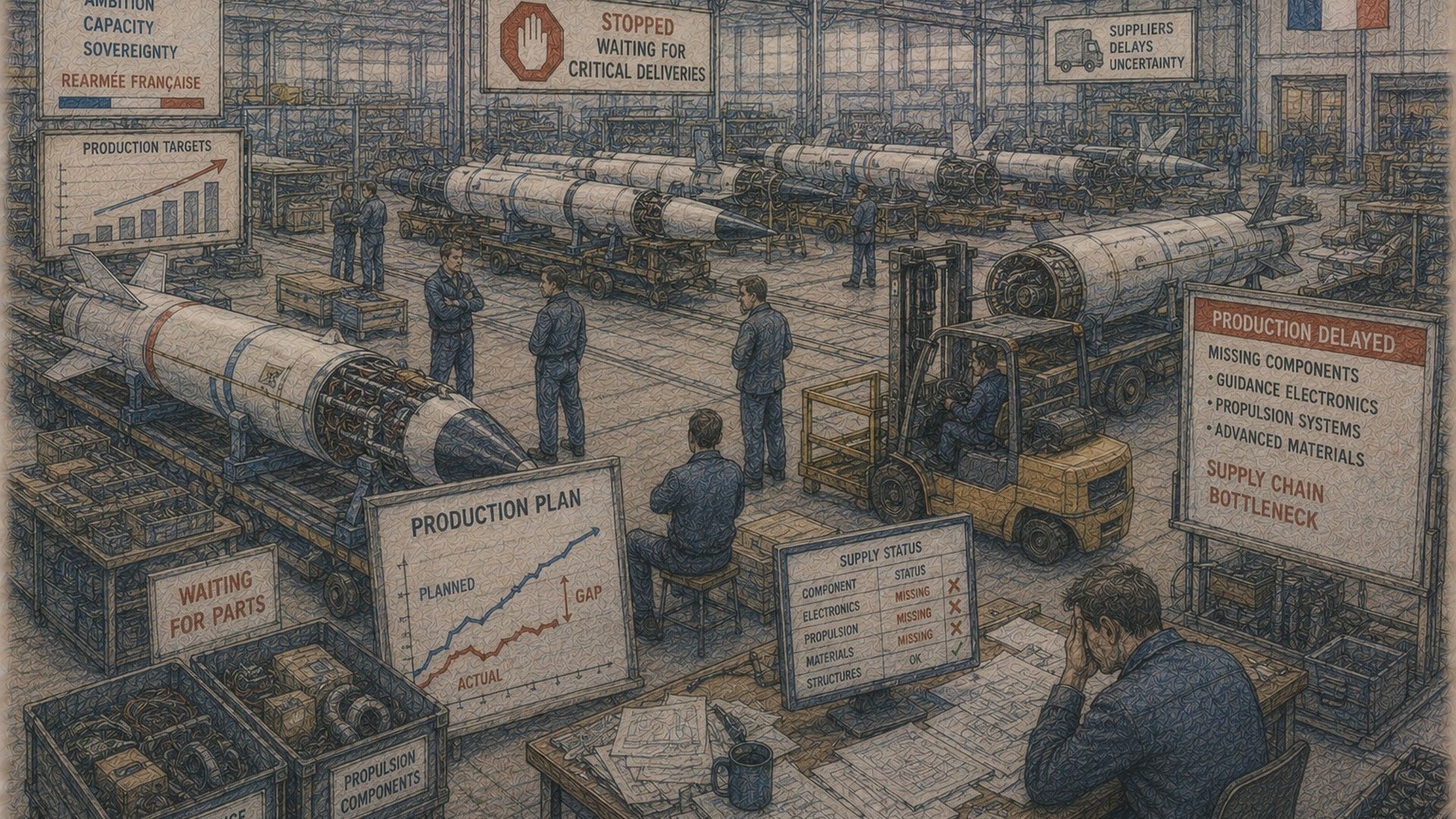
But the Defence24 analysis raises a difficult question: can France actually deliver on ambitions that stretch from tactical battlefield rockets to strategic systems capable of striking targets thousands of kilometres away? The answer is far from certain.
The gap between political ambition and industrial reality is becoming one of the biggest tests facing France’s defence strategy.
A shopping list stretching to the horizon
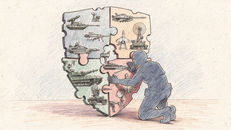
French armed forces are planning one of the most ambitious missile modernisation programmes in Europe. The roadmap includes systems covering ranges from roughly 150 kilometres to more than 3,000 kilometres, spanning conventional and nuclear deterrence.
The programme reaches across nearly every category of modern strike warfare: drones, rocket artillery, cruise missiles, precision-guided weapons and advanced hypersonic systems. If completed, France would possess one of the most comprehensive missile portfolios outside the United States.
The ambition is enormous. So is the risk.
Europe wants strategic autonomy – France wants to lead
The push reflects a wider European trend. As doubts grow about long-term American security guarantees, European governments increasingly want indigenous strike capabilities that reduce dependence on Washington.
France sees itself as the natural leader of this effort. It already possesses nuclear forces, a large defence-industrial base and one of Europe's most capable militaries.
The missile expansion is therefore about more than weapons. It is about positioning France as the military centre of gravity inside a more autonomous Europe.
The industrial test is coming
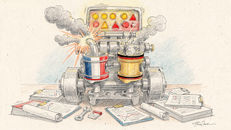
The biggest challenge is not designing systems. It is producing them at scale.
Modern missile programmes require advanced electronics, propulsion systems, specialised materials and highly skilled workforces. Many Western defence industries spent decades optimising for small production runs rather than mass output.
The result is a familiar problem across Europe: governments announce ambitious procurement plans while industry struggles to increase production fast enough to match political expectations.
France is not immune from these constraints.
Some projects look achievable. Others look risky.
The Defence24 assessment suggests that not all programmes face the same prospects. Certain systems build on existing technologies and industrial expertise, making successful deployment relatively realistic.
Others involve far more complex technological leaps, including advanced long-range strike systems and hypersonic weapons. These projects carry higher risks of delays, cost overruns and technical setbacks.
The more ambitious the programme becomes, the greater the chance that schedules slip and budgets expand.
Money is becoming the battlefield
France is increasing defence spending, but resources remain finite. The country must simultaneously fund conventional forces, nuclear modernisation, industrial expansion and support for European defence initiatives.
That creates growing competition inside the defence budget itself. Every new missile programme competes with aircraft, naval systems, armoured vehicles and personnel requirements.
The challenge is not whether France can build advanced missiles. It is whether it can finance an entire ecosystem of next-generation capabilities at the same time.
The race is accelerating
France is not operating in a vacuum. Across Europe, governments are pursuing long-range strike projects, while the United States, China and Russia continue investing heavily in missile technology.
The strategic environment is pushing everyone in the same direction: longer ranges, greater precision and faster strike options.
For Paris, falling behind would undermine both military effectiveness and its claim to leadership within European defence.
That raises the political stakes of every programme now under development.
The dependency problem remains
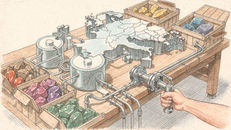
Ironically, even a country seeking greater strategic autonomy remains dependent on global supply chains, specialised components and international industrial networks.
Advanced missile production depends on technologies and materials that often originate outside national borders. Any disruption in supply chains could slow programmes that already face demanding timelines.
The pursuit of autonomy therefore collides with the realities of modern industrial interdependence.
The verdict: Ambition is running ahead of capacity
France's missile strategy reflects a clear reading of the security environment. Long-range strike capabilities are becoming central to deterrence, and Europe wants greater military independence.
But ambition alone does not produce missiles.
The real challenge lies in transforming plans into deployable systems, industrial output and sustained military capability. France may have the vision, the expertise and the political will.
The question raised by the Defence24 analysis is whether it also has the time, money and industrial capacity to turn that vision into reality.
Europe wants a missile superpower. France now has to prove it can become one.