
World Center for Strategic Studies
From closed analysis to public debate
- MONTH
- YEAR

Trump’s Trade Ultimatum: Europe Told To Stop Stalling
A fresh transatlantic row is exposing how little room Europe has when Washington decides to play hardball. The Politico report centres on a blunt warning from Donald Trump’s ambassador to the EU: stop reopening the deal, stop delaying implementation and honour what was agreed.
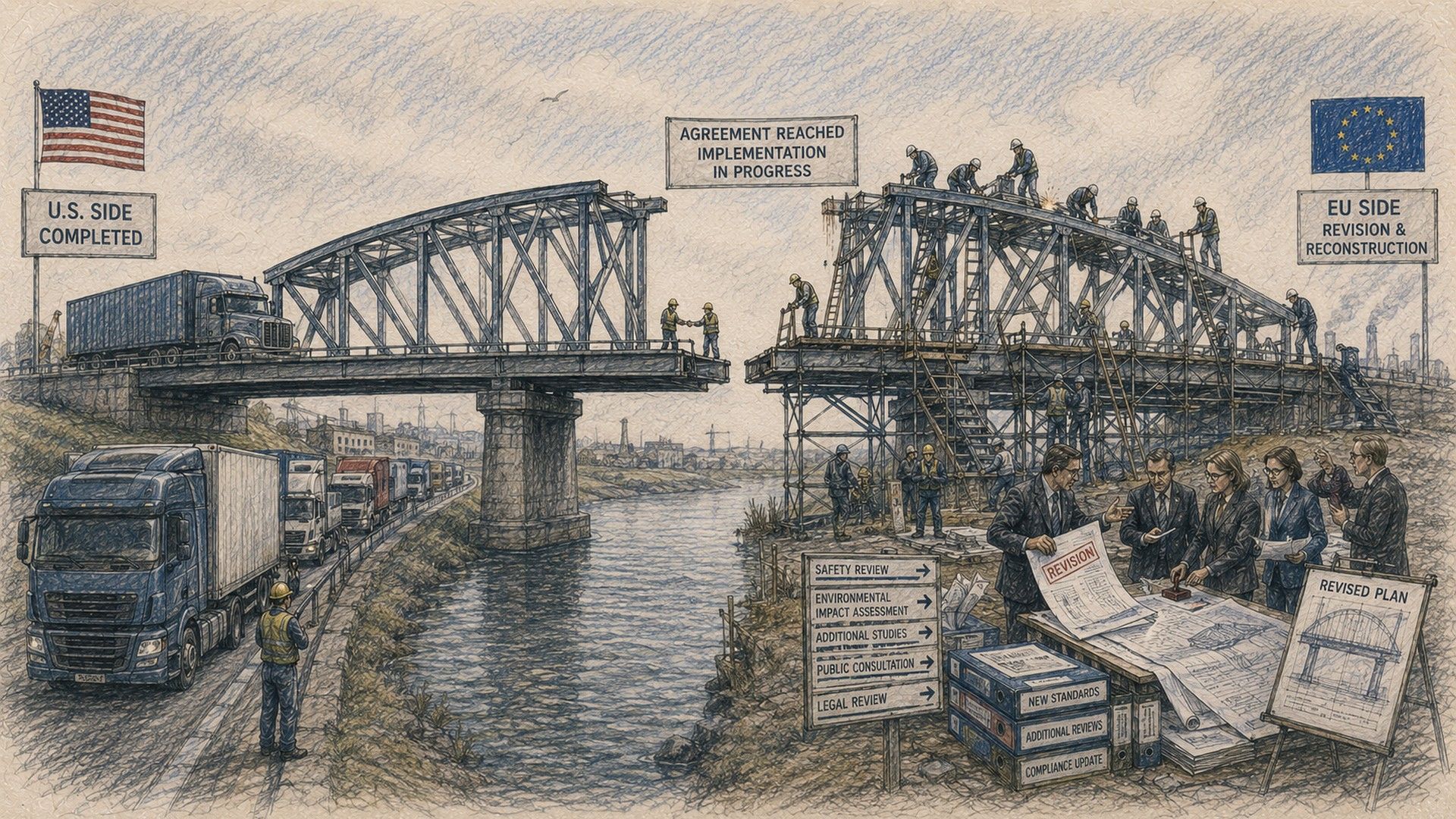
Behind the diplomatic language sits a harsher message. The United States believes Europe is dragging its feet, rewriting commitments and hiding behind procedure while Washington demands delivery. For Brussels, it is another reminder that its economic relationship with its most important ally is increasingly being shaped on American terms.
The dispute is not just about trade. It is about leverage – and who now holds it.
Washington loses patience
The core argument from the US side is simple: a deal was negotiated, signed and politically sold. Reopening it now would undermine credibility and trust.
Trump’s ambassador is effectively warning Brussels that endless revisions and institutional delays are no longer acceptable. The message reflects a broader frustration in Washington that the EU often negotiates agreements only to become trapped in its own approval machinery afterwards.
For Europe, this creates a dangerous perception problem. Partners increasingly see the bloc as slow to execute even when agreements already exist.
Europe did this to itself
The confrontation highlights one of the EU’s oldest weaknesses: decision-making that becomes paralysed once national governments, the Commission and the European Parliament start pulling in different directions.
Trade negotiations may be conducted collectively, but implementation often becomes a political battlefield. Domestic pressures, regulatory concerns and institutional rivalries can turn agreements into years-long struggles.
That gives outside powers an opening. While Brussels debates process, others push deadlines.
A credibility problem is growing
The dispute risks becoming bigger than the agreement itself. If major partners conclude that European commitments can be endlessly revised after signatures are placed on paper, future negotiations become harder.
The ambassador’s intervention is essentially a warning about trust. Washington wants proof that agreements survive European political turbulence.
For a bloc that constantly promotes itself as a reliable rules-based actor, doubts over implementation carry a serious reputational cost.
America sets the pace
The power dynamic is difficult to ignore. The US is dictating the timetable, defining the pressure points and openly signalling consequences for delays.
Brussels still has economic weight, but it increasingly finds itself responding to American deadlines rather than shaping events independently. The relationship looks less like a partnership of equals and more like a negotiation where one side is setting the clock.
That is an uncomfortable reality for European leaders who regularly speak about strategic autonomy.
This will fuel deeper tensions
The clash also lands at a sensitive moment. Europe is already dealing with pressure over competitiveness, industrial decline, defence spending and dependence on external markets.
Any renewed trade confrontation with Washington risks adding another layer of uncertainty for businesses already facing weak growth and geopolitical instability.
The longer implementation drags on, the greater the risk that frustration spills into wider disputes over tariffs, regulation and market access.
The uncomfortable truth: Europe cannot afford another transatlantic fight
The warning from Trump’s ambassador is about far more than one agreement. It exposes a broader weakness inside the European system – the growing gap between announcing deals and actually delivering them.
Brussels wants to be seen as a geopolitical power. But power is not measured by declarations, strategies or summits. It is measured by execution.
And right now, Washington is openly questioning whether Europe can deliver on its own promises.