World Center for Strategic Studies
From closed analysis to public debate

- MONTH
- YEAR

Europe’s Protest Wave Exposes a Deeper Crisis: France Is Running Out of Money, Trust and Time
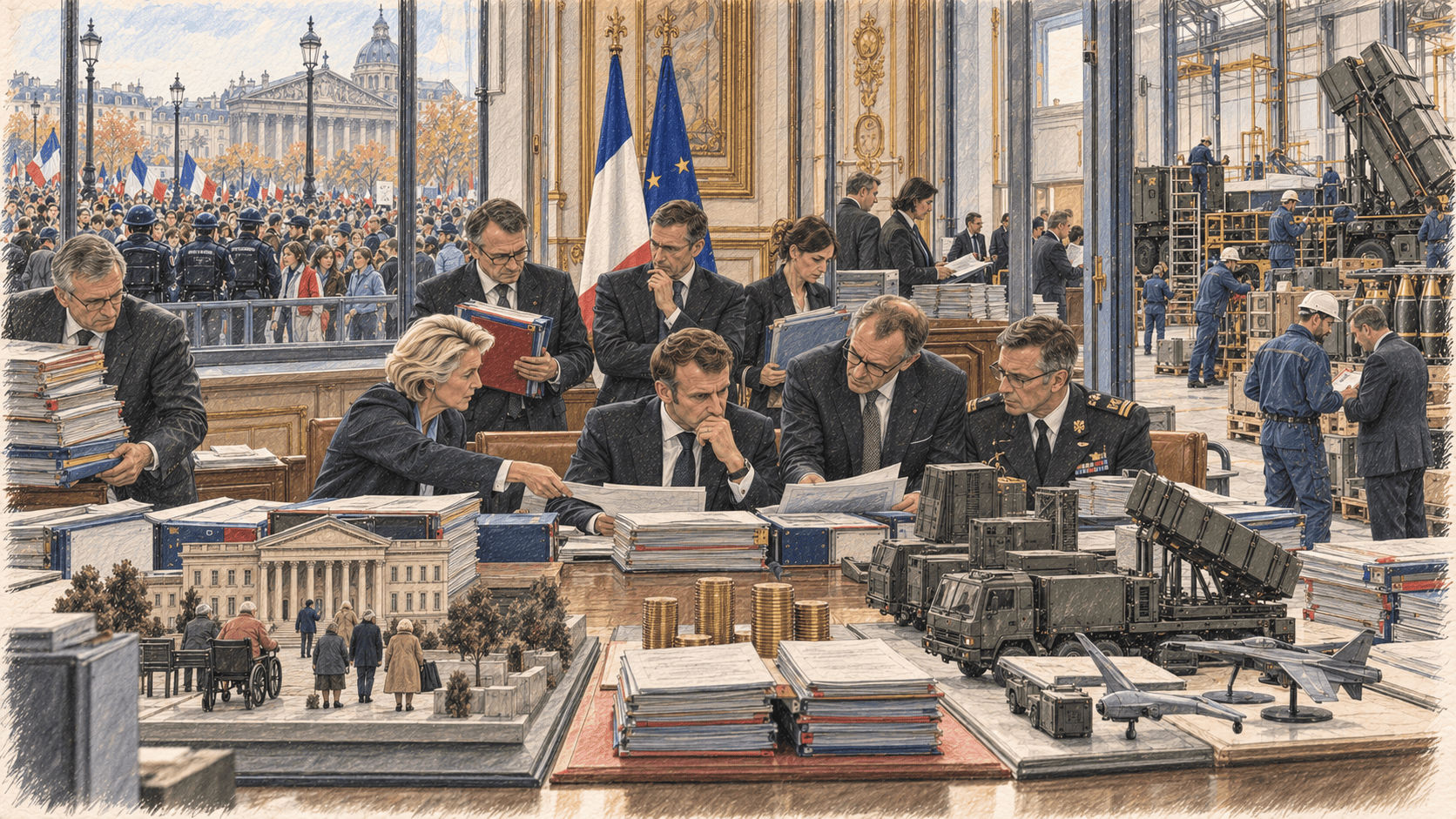
France’s streets are erupting as Europe confronts a dangerous collision of economic stagnation, political paralysis and weakening American security guarantees. In a Council on Foreign Relations commentary, Michael Froman warns that the latest French protests are more than another outbreak of public anger – they signal a breakdown in the country's social contract. Young people face unemployment and unaffordable living costs while governments devote growing resources to pensions, debt servicing and defence. Similar pressures are emerging in Britain, Italy and Belgium. The danger is that European leaders are losing the political capacity to undertake essential reforms just as Washington becomes less reliable and Russia continues its war against Ukraine.
France’s social contract is breaking down
Froman argues that the October protests differ from France's familiar tradition of street demonstrations.
The underlying grievances are structural. Education is underperforming, economic growth remains weak and younger generations face diminishing prospects for prosperity.
One in five young French people is unemployed, while an increasingly small working population must finance growing pension commitments.
The result is a widening divide between what citizens expect from the state and what the economy can sustainably deliver.
Paris is running out of fiscal options
France's financial difficulties make the political crisis harder to resolve.
Public expenditure accounts for approximately 57 per cent of GDP, compared with 37 per cent in the United States when state and local spending are included.
The government cannot easily increase taxes without damaging an already weak economy. Spending cuts provoke fierce political resistance.
Meanwhile, a government-commissioned assessment projects that annual interest payments on French debt could rise by 59 per cent by 2030.
Froman warns that this combination leaves Paris with few politically acceptable ways to stabilise its finances.
Defence spending adds another impossible demand
Europe's security environment is forcing governments to spend more precisely when their budgets are under greatest pressure.
France has committed to doubling its defence expenditure from 2017 levels by 2027.
But military investment competes with pensions, public services and the demands of dissatisfied voters.
The dilemma extends beyond France. Britain also faces expensive commitments it cannot easily finance, politically difficult spending reductions and growing pressure to strengthen national security.
European governments are being asked to deliver more with fiscal resources that are already stretched.
Protests could deepen political fragmentation
The approaching French presidential election in April 2027 adds urgency.
Froman argues that radical-right parties could seek to capitalise on resentment towards established political institutions, including anger surrounding the demonstrations.
Similar political tensions are developing in Germany, where regional elections continue to test established party loyalties.
The protests therefore raise a broader question about whether European governments can retain sufficient public support to implement unpopular economic reforms.
The United States is becoming less dependable
Europe's domestic difficulties coincide with another deterioration in relations between Washington and Kyiv.
Froman highlights President Donald Trump's decision to waive new secondary sanctions against Russia, an agreement to purchase Russian diesel and statements critical of Ukrainian President Volodymyr Zelenskyy.
The author interprets these developments as evidence that Washington's approach to Moscow is changing in ways that could weaken Europe's security position.
For European governments already struggling with fiscal and political constraints, the implications are serious.
Europe's military independence remains distant
Despite repeated announcements about European rearmament, Froman argues that the continent cannot quickly replace American military capabilities.
New defence investment will take years to translate into production capacity, equipment and operational readiness.
Until then, Washington retains disproportionate influence over the course of the war in Ukraine.
Europe therefore faces a difficult dependency: its security increasingly requires independent action, but its military capabilities remain insufficient to deliver that independence.
Political paralysis threatens economic reform
Froman points to the Draghi and Letta reports as evidence that Europe's structural economic problems are already well understood.
The necessary changes include improving competitiveness, strengthening economic integration and consolidating the European defence industry.
The obstacle is political implementation
Britain has had six prime ministers in a decade, while France has experienced repeated government changes under Emmanuel Macron.
Frequent leadership turnover and fragmented political systems make sustained reform increasingly difficult.
The warning sign: Europe's domestic paralysis is becoming a security liability
Froman's central argument is that economic weakness, public unrest and geopolitical dependence are reinforcing one another.
Governments cannot easily stabilise public finances without provoking protests, strengthen defence without additional spending or reduce reliance on Washington without major structural reforms.
France may be the clearest warning, but the pressures extend across Europe.
The coming test is whether European leaders can restore public confidence and undertake long-delayed reforms before domestic political divisions further weaken the continent's ability to respond to external threats.