World Center for Strategic Studies
From closed analysis to public debate
- MONTH
- YEAR

UN Climate Alarm Under Fire: Pregnancy Risks Spark a New Fight Over Global Funding
The United Nations has put pregnant women and newborn babies at the centre of its latest climate warning – and an Austrian commentator is accusing it of turning a serious health concern into another argument for massive international spending. Writing for TKP, Peter F. Mayer challenges the evidence presented by UN climate chief Simon Stiell ahead of COP31, questioning whether a survey of healthcare workers can support sweeping claims about a worsening global crisis. His criticism goes further: he argues that climate finance increasingly benefits international institutions, consultants and corporations while taxpayers shoulder the costs. But the article's allegations about financial beneficiaries are not independently established, and its attack on the survey does not disprove the wider scientific evidence linking extreme heat to pregnancy risks.
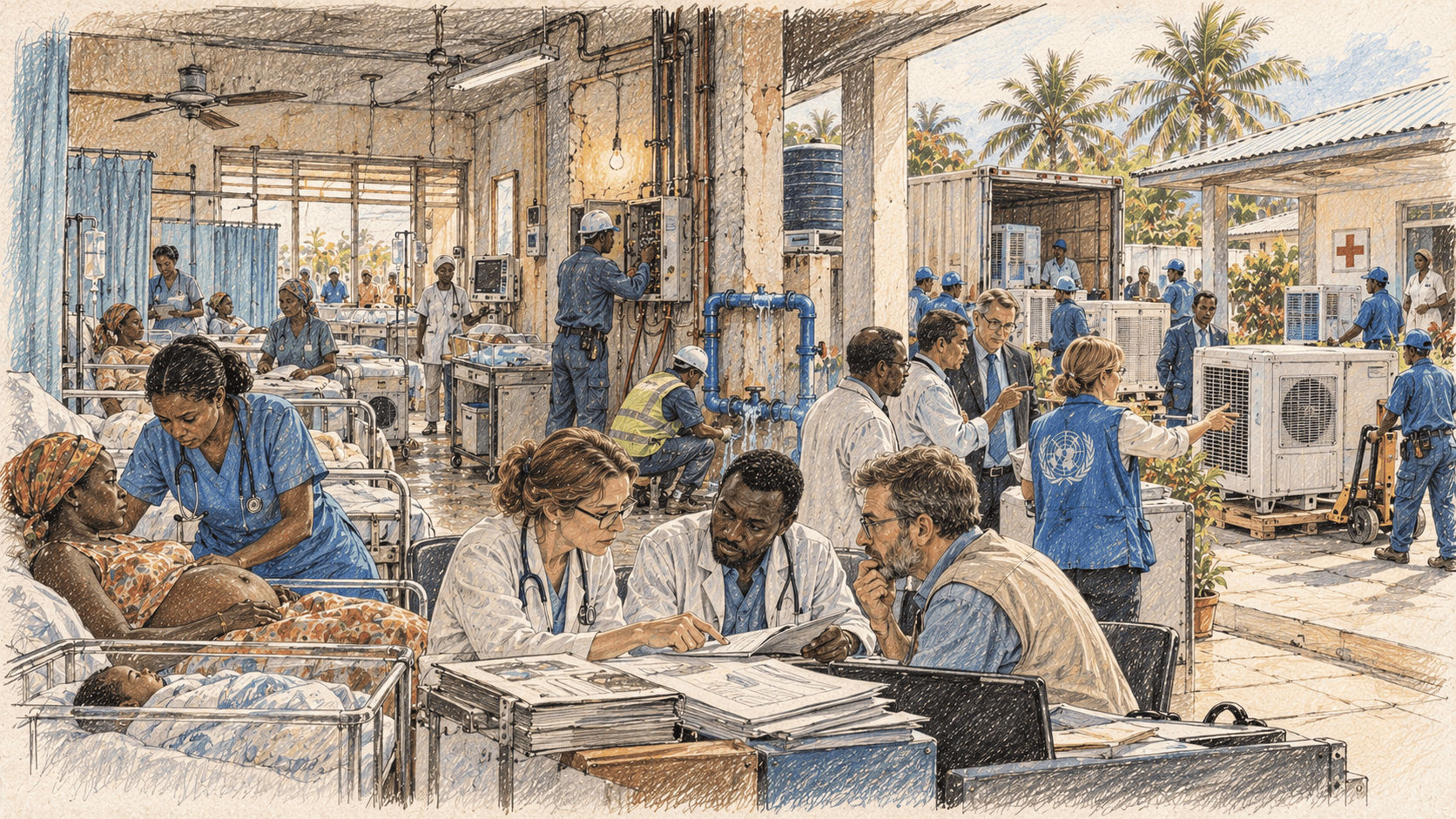
Pregnancy becomes the latest climate battleground
Speaking in Fiji on 5 October 2026, Stiell described maternal and newborn health as an emerging fault line in the climate crisis.
He cited a Wellcome-commissioned survey of 1,000 obstetricians, midwives and nurses across five countries.
Among respondents, 73 per cent reported an increase in heat-related complications affecting pregnant women over the previous five years, while 76 per cent reported similar trends involving fetuses and newborns. Another 92 per cent wanted additional training and resources.
For TKP, these figures raise questions about how the UN communicates scientific evidence.
A survey is not a clinical trial
Mayer's central objection concerns the distinction between professional observations and independently measured medical outcomes.
The survey records what healthcare workers report experiencing. It does not, by itself, establish how many additional premature births or complications were caused by rising temperatures.
The article argues that presenting such findings without sufficiently explaining their limitations risks exaggerating the strength of the evidence.
That methodological distinction is valid, although observational and epidemiological research can provide evidence of heat-related health risks without requiring clinical trials.
Climate finance enters the argument
The controversy intensifies because Stiell linked climate adaptation to international financing commitments.
He called for implementing the agreed tripling of adaptation finance and mobilising $1.3 trillion annually for developing countries.
TKP interprets this as evidence of a recurring political pattern: international organisations highlight new dimensions of climate vulnerability and then demand larger financial commitments.
The author questions whether the resulting expenditure delivers sufficient practical benefits to vulnerable communities.
Western taxpayers face the bill
The article alleges that climate finance operates through a chain of development banks, consulting firms, technology suppliers, NGOs and financial institutions.
According to Mayer, money intended for vulnerable countries can return to companies and intermediaries in wealthier economies through contracts, fees, equipment purchases and debt repayments.
He portrays this as a system that could transfer financial burdens to ordinary taxpayers while creating commercial opportunities for well-connected organisations.
However, the article provides no comprehensive financial accounting demonstrating that these intermediaries capture most of the proposed funding.
The health risks are wider than climate change
TKP argues that international organisations give insufficient attention to poverty, inadequate sanitation, unreliable electricity, poor healthcare infrastructure and exposure to industrial pollutants.
These problems can seriously affect maternal and newborn health, particularly in poorer countries.
But they are not mutually exclusive with heat-related risks. The UN's own proposals include reliable electricity, water, cooling, better clinics and stronger healthcare systems.
The real dispute is therefore over how to establish priorities, evaluate evidence and ensure that international financing produces measurable improvements.
The reality check: Climate warnings demand evidence and financial accountability
Mayer presents the UN's pregnancy warning as an example of climate concerns being used to justify increasingly ambitious funding demands. His broader accusation is that the international financing system rewards institutions and commercial intermediaries more reliably than vulnerable populations.
The article raises legitimate questions about survey interpretation and the transparency of climate spending, but its strongest claims about institutional profiteering remain allegations rather than demonstrated findings.
For Europe and other major contributors, the policy challenge is to scrutinise financing commitments while ensuring that concerns about bureaucracy do not obscure documented health risks from extreme heat.