World Center for Strategic Studies
From closed analysis to public debate
- MONTH
- YEAR

Europe’s Rearmament Gamble: Billions in Defence Spending Could Leave Its Arms Industry Divided
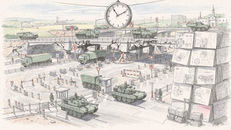
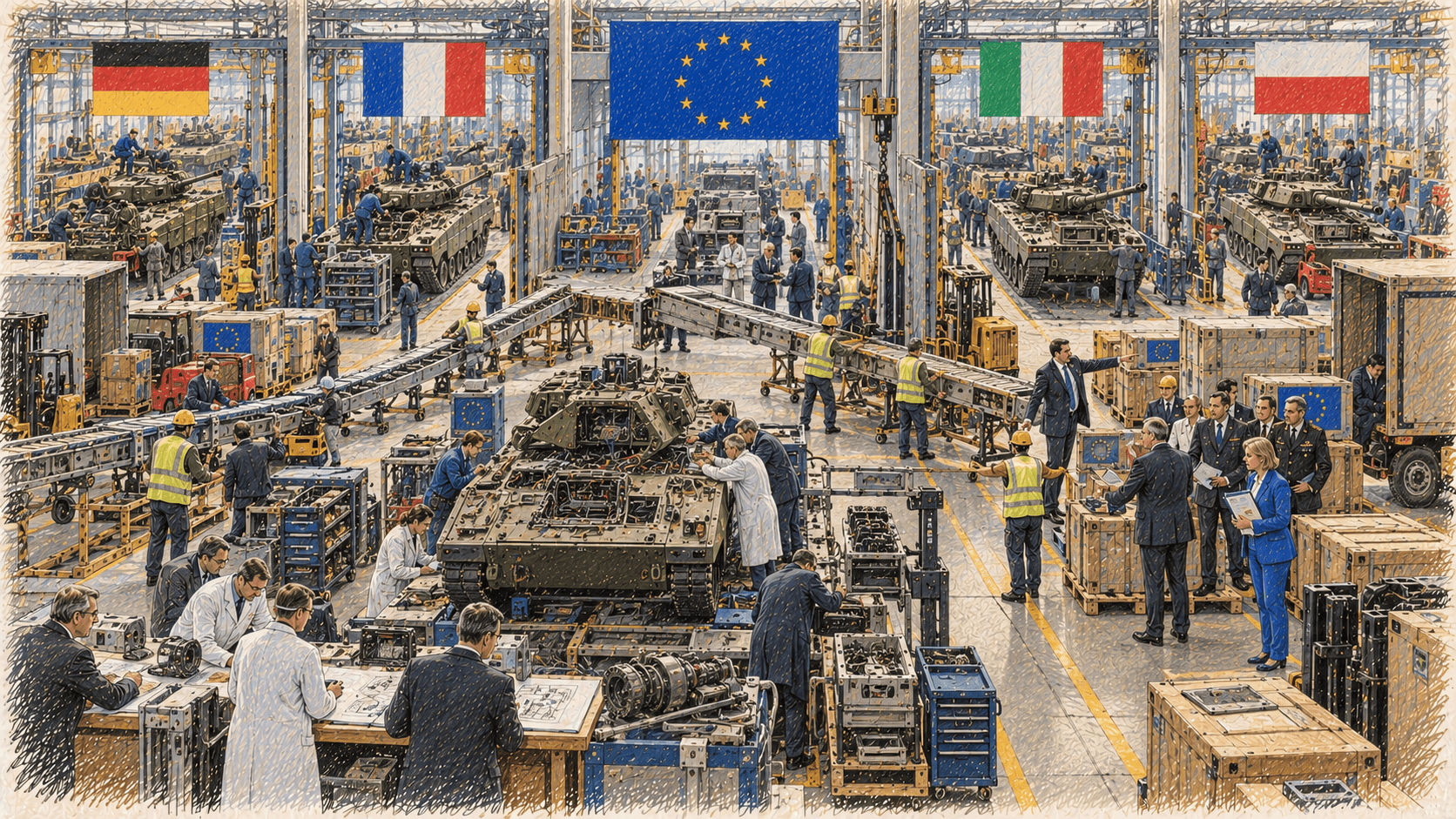
Europe is preparing a massive military spending drive, but more money does not automatically mean a stronger European defence industry. An IRIS assessment warns that the EU’s ReArm Europe plan could accelerate weapons purchases and expand production without solving the fragmentation that has weakened European military manufacturing for decades. The central danger is that national governments use new financial flexibility to reinforce their own suppliers rather than build a competitive European industrial base. Brussels could end up financing a rearmament boom that delivers more weapons but leaves Europe’s defence market divided, inefficient and dependent on competing national priorities.
Europe has changed its defence priorities
Before Russia’s full-scale invasion of Ukraine, EU defence initiatives focused largely on research, innovation and industrial cooperation.
Programmes launched from 2017 onwards, culminating in the European Defence Fund, aimed to rebuild technological capabilities weakened by decades of underinvestment and encourage companies from different member states to cooperate.
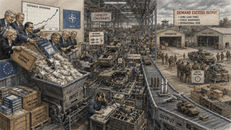
The war changed the urgency. Europe now needs weapons, ammunition and production capacity much faster than traditional research programmes can deliver.
The question is whether emergency procurement can also strengthen the industrial structures Europe will need for decades.
Brussels is opening the financial taps
ReArm Europe combines greater national budget flexibility with new EU-backed financing.
The activation of national fiscal escape clauses allows participating governments to increase defence expenditure without immediately facing the usual fiscal constraints.
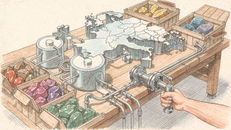
Meanwhile, the €150 billion SAFE instrument provides loans to support arms acquisitions, with joint procurement requirements intended to encourage cooperation between member states.
These measures can stimulate demand and give manufacturers greater confidence to expand production.
But financing purchases is not the same as integrating an industry.
National freedom could deepen fragmentation
The fiscal escape clause gives governments room to raise defence spending by up to 1.5 per cent of GDP over four years without that additional expenditure counting against normal EU fiscal limits.
But IRIS highlights a crucial weakness: this flexibility comes without industrial conditions.
Governments can spend the additional money on national procurement, infrastructure or expanding their armed forces. Nothing automatically directs it towards shared European programmes or industrial consolidation.
The result could be a stronger collection of national defence industries rather than a genuinely integrated European market.
SAFE offers cooperation, but not a guarantee
SAFE is more restrictive because it requires purchases involving at least two countries.
That creates incentives to pool orders and develop common procurement arrangements.
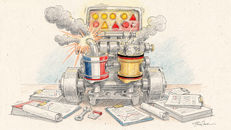
Yet joint purchasing does not necessarily mean lasting industrial integration. Governments may cooperate on individual contracts while preserving separate national production structures and competing industrial priorities.
The distinction matters: buying weapons together is not the same as building a common industrial base.
Europe's earlier programmes had a clearer purpose
IRIS contrasts the new spending instruments with earlier EU initiatives.
The European Defence Fund and its predecessors linked financial support to cross-border industrial partnerships, technological development and European eligibility requirements.
Emergency measures introduced after Russia's invasion, including EDIRPA and ASAP, began shifting attention towards procurement and ammunition production.
ReArm Europe takes that shift further, putting rapid capability acquisition at the centre of policy.
The risk is that industrial restructuring becomes a secondary objective just when Europe is committing much larger sums.
The real test is what survives the spending surge
The report raises a question Brussels cannot answer simply by announcing more funding.
Will the new instruments encourage European companies to cooperate more closely, reduce duplication and develop lasting production capacity? Or will they reinforce existing national divisions under the pressure of urgent military requirements?
The difference will determine whether rearmament improves Europe's long-term industrial competitiveness or merely increases expenditure within an already fragmented system.
The key point: Spending more does not mean building together
IRIS identifies a fundamental tension between accelerating rearmament and consolidating Europe's defence industry. Both objectives matter, but the financial instruments designed to achieve the first do not automatically deliver the second.
Europe could emerge with larger military budgets and more equipment while retaining the industrial weaknesses that have limited its defence capabilities for years.
Brussels must ensure that the rush to buy weapons does not undermine the effort to build a stronger European defence industry.